
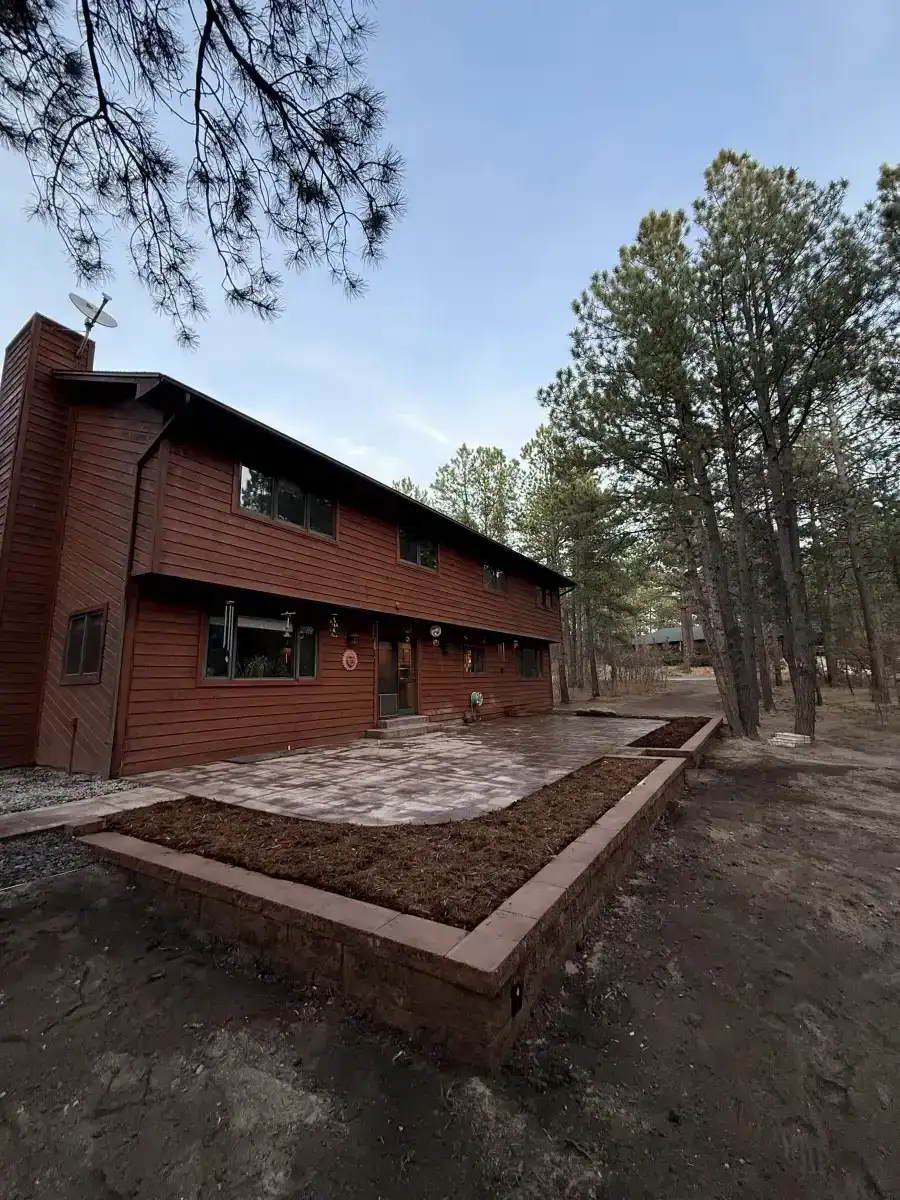
Your first winter with a new patio should begin with a short walkthrough, not a shopping list of sealers and ice melt. Trace the water route, record the finished condition, and get care instructions for the actual materials installed.
For a Colorado Springs-area yard, rain and snowmelt both belong in that conversation. El Paso County’s stormwater guidance explains that hard surfaces create runoff rather than letting all that water soak into the ground. A clean-looking patio on a dry day cannot show you its whole drainage story.
Ask Your Installer to Trace the Water From Roof to Outlet
Walk from your back door to the patio’s outer edge. Ask where water is intended to leave the surface, where it goes next, and which drain openings or landscape channels you need to keep clear. Include downspouts, steps, adjoining walks, and the transition into lawn or planting beds.
Then observe the patio during rain or a thaw from a safe, dry place. Does roof runoff cross your route to the yard? Does water collect beside the house or at the bottom of a step? Does a snow-storage spot send meltwater back across the walking surface? These are specific observations to share with the installer, rather than reasons to guess at a new drain or change the grade yourself.
Ask for the intended drainage route to be marked on a photo or simple sketch. That gives you a useful reference when leaves fall, furniture moves, or snow hides the edges.
Record Changes Before Trying a Repair
Take a few dry-day photos now: one wide view and close-ups of joints, edges, steps, and the connection to the house. If a wet area appears later, photograph it from the same position and note the weather and water source.
- Water repeatedly collects in one spot: note whether it remains after surrounding areas dry and whether a downspout feeds it.
- An edge or individual unit moves: show its location in a wide photo as well as a close-up. Keep people away from a loose or unstable walking surface.
- Joint material washes out: record where it happens and ask what replacement material and method match the installation.
Contact your installer about a changing surface or recurring pool. Photos help describe the concern; they do not establish its cause. Avoid adding sand, cutting an outlet, or lifting units before the installer has reviewed what you are seeing.
Get Care Instructions for Your Surface, Joints, and Finish
Pavers, natural flagstone, and stamped concrete need different care decisions. Even two paver patios can use different joint products or factory treatments. Ask for the material names, any sealer already applied, and the current manufacturer care sheets. Keep them with your installation paperwork.
For routine cleanup, remove loose leaves and debris rather than letting them collect. Bag or compost yard waste; the county advises against sweeping it into streets or storm drains. Before using a pressure washer, check the surface and joint-product guidance. Unilock’s cleaning guide warns that inappropriate pressure or nozzle settings can damage pavers and dislodge joint sand.
Sealing is a separate decision. For example, Unilock describes sealing its concrete pavers as optional. That is not a care rule for every patio. Ask whether your selected surface needs a sealer, what product is compatible, and what curing, drying, and weather conditions must be met. A forecast of snow is not enough reason to rush an application.
Agree on Snow Removal Before the First Storm
Ask which tools are suitable for the surface and edges, and where to place removed snow so the meltwater follows the planned drainage route. Belgard’s winter-care guidance recommends a plastic-bladed shovel to help avoid damage to pavers. Confirm the instructions for your own material and any snow-removal equipment you plan to use.
Before buying an ice-control product, ask the installer to identify one that is compatible with your surface, joints, and finish. Follow the relevant product instructions. Do not assume a product used on your driveway is suitable for a newly installed patio.
First-Winter Patio Questions
Should I seal a new patio before its first winter?
Not automatically. The right approach depends on the surface, any existing treatment, and the selected sealer. Ask your installer for the product-specific instructions and application conditions before deciding whether to seal now or wait.
What should I send my installer if water pools on the patio?
Send a wide photo showing the house and patio, a close-up of the wet area, and a note about whether the water came from rain, snowmelt, or a downspout. Record whether it remains after nearby areas dry and whether the same spot collects water again.
Can I use the same ice melt as on my driveway?
Do not assume it is suitable. Confirm the exact patio material, finish, joint product, and any sealer, then follow the applicable manufacturer instructions. Ask your installer which snow-removal tools and ice-control products are appropriate for your new surface.
Planning a Patio? Include First-Winter Care in the Conversation
Explore CN Landscaping’s patio installation options, then bring your layout, runoff concerns, and maintenance preferences to an estimate. We serve Colorado Springs and nearby communities including Monument and Black Forest; see our service areas for more local information.
Already comparing project budgets? Our patio budgeting guide covers installation and site-work costs. For your own yard, request a free estimate or call (719) 460-5685.