
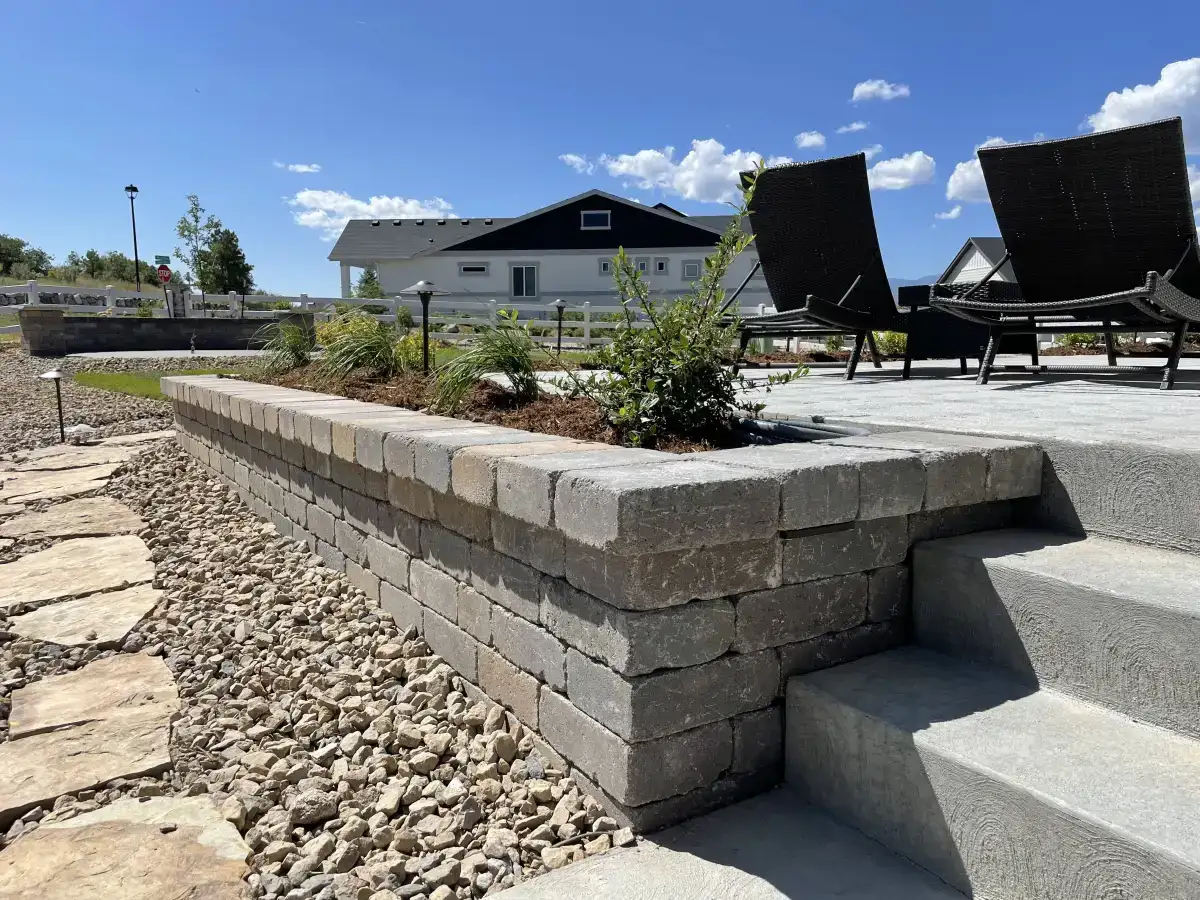
Affordable landscaping is not the same as choosing the lowest first number. The better goal is a yard that solves your biggest problem now, protects the work beneath the surface, and leaves room for later improvements without paying to undo what was already installed.
That distinction matters in Colorado Springs, where grade, drainage, clay-heavy soil, strong sun, wind, limited rainfall, and freeze-thaw movement can influence what belongs under a patio, around a retaining wall, inside a planting bed, or within an irrigation plan. If you are comparing landscaping options, use the following framework to decide where to spend, where to simplify, and what can wait.
Set One Priority Before You Price the Whole Yard
A long wish list makes it difficult to see which part of a proposal is solving the problem you care about most. Start with one primary outcome: a usable gathering area, less lawn to water, safer steps on a slope, better drainage, more privacy, or a finished front yard. Then name two or three features that support it.
This gives a contractor room to price a focused solution instead of treating every idea as equally urgent. A patio can be right-sized around the furniture and movement it needs to support. Planting can be concentrated near the entry or seating area. Rock can replace lawn where irrigation is difficult without covering every open part of the yard.
Protect, Simplify, or Postpone Each Part of the Plan
Use these three categories when reviewing a concept or estimate. They help reduce the initial scope without creating obvious rework later.
| Decision | Good candidates | Why it matters |
|---|---|---|
| Protect | Drainage, grading, base preparation, soil preparation, irrigation planning, and structural wall work | These parts support the finish and are difficult to repair after patios, lawn, rock, or planting are in place. |
| Simplify | Square footage, material variety, decorative borders, planting quantity, plant size, and lighting fixture count | A smaller, clearer design can still deliver the main outcome with fewer materials and transitions. |
| Postpone | Features that can be added later without crossing finished work or reopening underground systems | A planned second phase spreads spending over time without paying twice for demolition, access, or restoration. |
Spend on the Work That Is Hard to Reach Later
Visible finishes are easy to compare, but the concealed work often determines whether the landscape functions as intended. If water already collects near the house, crosses a walkway, or erodes a slope, address how it moves before covering the area. If a patio or wall is planned, the relevant excavation, base, drainage, and transition details belong in the scope.
The same rule applies to irrigation. Before adding sod, trees, shrubs, or flowers, decide which areas need water, how zones will be used, and where future planting may go. A coordinated irrigation plan can be less disruptive than reopening a finished bed or lawn later.
Simplify the Finish Without Making the Yard Feel Unfinished
Affordability often comes from editing, not from using the least expensive version of everything. Limit the number of hardscape materials. Repeat one rock or mulch treatment. Use a strong edge between lawn and beds instead of several decorative bands. Group plants in the places where they frame an entry, soften a patio, or improve privacy.
Smaller areas can also work harder. A modest patio sized for your table, grill, and comfortable circulation may be more useful than a large paved area with no clear furniture plan. A targeted retaining feature may solve a transition without redesigning every slope. The important question is whether the reduced scope still handles movement, water, grade, and the way you want to use the yard.
Choose Lower-Water Areas With a Maintenance Plan
Reducing irrigated lawn can lower water demand, but replacing grass with rock everywhere is not automatically the best value. Rock still needs edging, weed management, debris cleanup, and thoughtful placement. Planting beds need establishment watering and seasonal attention. Artificial turf has its own preparation, drainage, and cleaning considerations.
A practical xeriscape plan can combine smaller lawn areas, region-appropriate planting, rock or mulch, and efficient irrigation according to how each part of the yard is used. The most affordable mix is the one whose installation and ongoing care both fit your priorities.
Phase the Project in an Order That Avoids Rework
Phasing works when the first phase protects access and prepares for what follows. Work that changes grade, manages drainage, creates structural support, or places underground irrigation usually needs to come before surface finishes. Major material delivery or equipment access should also happen before a narrow gate, delicate planting, or finished lawn closes the route.
Ask for the plan to identify future connection points. Sleeves under a planned hardscape, irrigation capacity for a later bed, or a clear edge for a future path may be worth including now even if the visible feature comes later. A landscape design and installation plan is especially useful when several phases need to work as one finished yard.
Compare Scope Instead of a Single Hourly Rate
An hourly number by itself does not tell you how many people are on the crew, which equipment is included, how material handling is organized, or what will be finished in that time. It also does not show removal, hauling, preparation, cleanup, or the quality and quantity of materials.
For an installation project, compare written scopes that describe the same result. Look for clear quantities or areas, preparation, material choices, irrigation or drainage work where relevant, cleanup, exclusions, and how changes are approved. If one proposal is lower, identify what is different before assuming it represents the same work for less.
Ask for One Base Plan and Useful Alternatives
Instead of requesting several unrelated versions of the yard, ask for a base scope that achieves the main goal and a few meaningful alternatives. Examples might include changing patio size, adjusting the number or size of plants, postponing lighting, or comparing two finish materials while keeping the necessary preparation consistent.
This makes tradeoffs visible. You can see which choice changes the budget and which part of the outcome changes with it. It also keeps the conversation centered on your yard rather than on broad price averages that do not account for access, grade, soil, drainage, or material quantity.
Affordable Landscaping Checklist for Colorado Springs
- Name the single problem or outcome the first phase must address.
- Separate structural and preparation work from finish upgrades.
- Reduce square footage and material variety before cutting necessary preparation.
- Plan irrigation, drainage, and equipment access before finished surfaces close them off.
- Ask whether future phases can connect without removing completed work.
- Compare written scope, quantities, assumptions, and exclusions—not only the total or hourly rate.
- Choose a maintenance level you can realistically keep up with after installation.
The Colorado Springs service-area guide covers more of the local conditions that can shape these decisions.
Frequently Asked Questions
What is the cheapest landscaping option?
There is no single cheapest option for every yard. A focused plan is often the most affordable: keep the area smaller, simplify the material palette, concentrate planting where it matters most, and phase features that can be added later without disturbing completed work.
How much does landscaping cost in Colorado Springs?
Cost depends on the work required at your property, including access, removal, grading, drainage, soil or base preparation, irrigation changes, materials, quantities, and finish details. A site-specific written scope is more useful than a broad price range.
Where should I avoid cutting costs on a landscape project?
Do not remove necessary grading, drainage, base preparation, soil preparation, or irrigation planning simply to reduce the first proposal. Those parts support the visible finish and may be difficult to correct after patios, walls, lawn, rock, or planting are installed.
Is an hourly landscaping rate the best way to compare estimates?
Not by itself. An hourly rate does not show crew size, equipment, material quantities, site preparation, hauling, cleanup, or what the contractor expects to complete. Compare written scopes, assumptions, exclusions, and the finished result instead of using one hourly number alone.
Can I phase a landscaping project to make it more affordable?
Yes, when the phases follow a sensible order. Complete work that controls drainage, grade, access, underground irrigation, and structural features before finishes that would otherwise need to be removed later.
Build a Scope Around Your Priority and Budget
Bring the main result you want, the features you consider essential, the maintenance level you prefer, and any known drainage or access concerns to the estimate. CN Landscaping can evaluate that information with the conditions at your property and discuss a focused scope or practical phase plan.
Request a free landscaping estimate or call (719) 460-5685 to start a conversation about your Colorado Springs yard.