
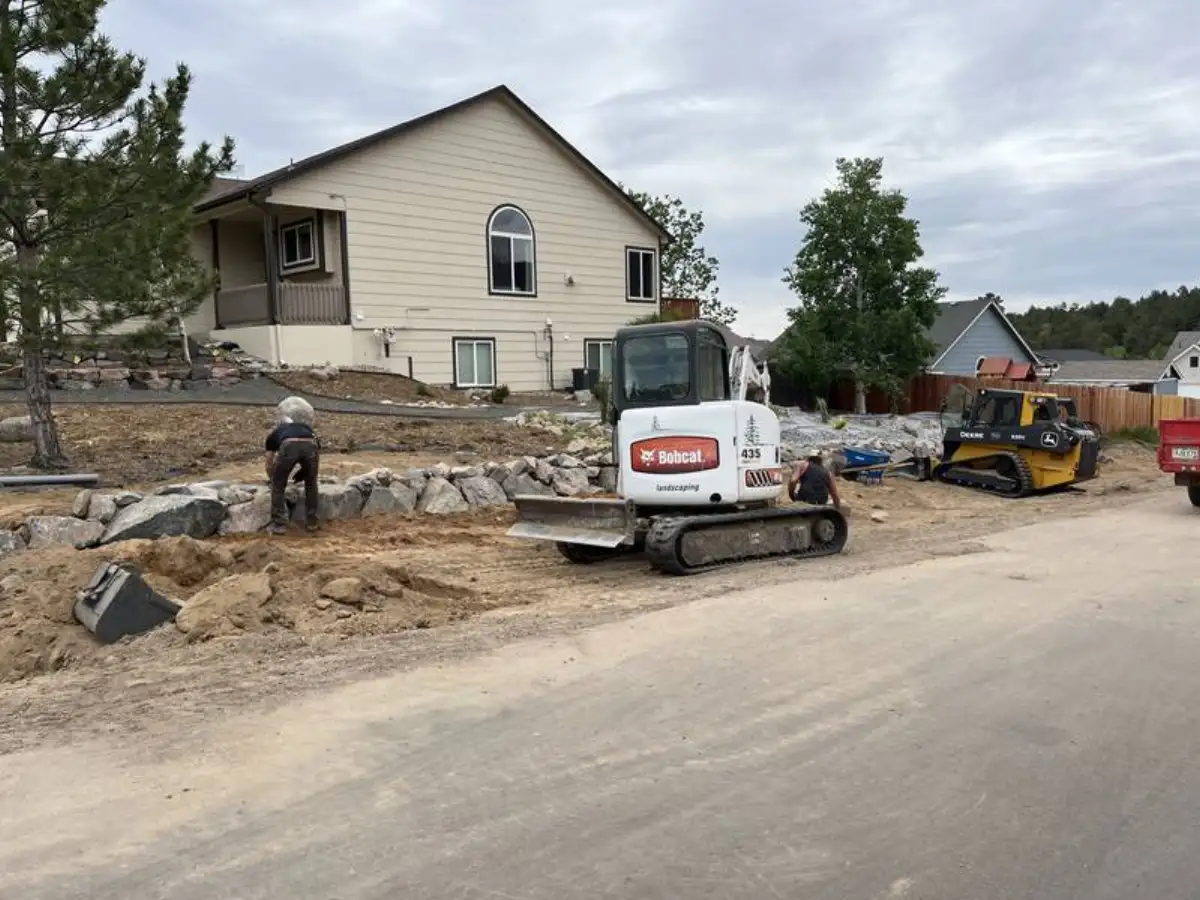
“Landscaping” can mean one targeted improvement or a yard-wide installation. Before you book, the most useful questions identify what the property needs first, which features must work together, and what belongs in the initial scope.
That planning matters in Colorado Springs. Strong sun, wind, clay soil, freeze-thaw movement, and sudden storms can affect drainage, plant placement, irrigation, base preparation, and material choices. A clear conversation about those conditions gives a landscaping contractor a better starting point than a list of finishes alone.
1. Do I Need a Complete Landscape Plan or One Focused Service?
Start with the result you want from the yard. You may need a safer slope, a patio for daily use, a lower-maintenance front yard, better irrigation coverage, more planting, or a coordinated outdoor living space. One defined problem may call for a focused installation. Several connected changes may benefit from landscape design before materials are ordered.
A plan becomes especially useful when patios, walls, turf, planting beds, lighting, and irrigation share the same space. It sets the relationships and order before one installation limits the next.
2. What Needs to Happen Before the Visible Materials Go In?
The finished sod, rock, plants, pavers, or turf are only the top layer. Ask what removal, grading, soil preparation, base work, edging, drainage, and irrigation adjustments the property needs first. Those details should respond to the actual yard—not a standard material package.
Show the contractor where water collects after storms or snowmelt, where runoff enters the property, and where the ground slopes toward or away from the house. Water movement should be understood before finish materials cover the work area.
3. How Should Irrigation, Lawn, and Lower-Water Areas Work Together?
New landscaping changes where and how a yard needs water. Existing spray zones may not match new planting beds, and new trees or shrubs may need different coverage than sod. Ask whether the irrigation plan separates unlike watering needs and whether lines or sleeves must be installed before hardscape.
If lower upkeep or water use is a priority, discuss where lawn earns its place and where xeriscaping, rock, or planting beds may be more practical. The best mix depends on how each area is used, its exposure, and the maintenance you want to take on.
4. Are Patios or Retaining Walls Part of the Same Site Plan?
A patio affects grade, drainage, access, and the transition into surrounding lawn or beds. A retaining wall can affect usable elevation, steps, drainage, and the amount of soil that must move. If either feature is part of the project, ask how it connects to the rest of the yard.
Also ask what sits beneath and behind the visible materials. Base preparation, compaction, slope, and drainage are central parts of a hardscape installation, even though they are less visible at completion.
5. What Property Access Details Could Change the Work?
Gate width, fences, steps, driveway slope, parking, mature trees, utility areas, and the distance from the street to the yard can all affect equipment and material movement. Point out surfaces that need protection, shared access, pets, and any known HOA requirements during the walkthrough.
Access affects more than convenience. It can shape how materials are delivered, where they are staged, which equipment can enter, and how long removal and cleanup take.
6. Can the Project Be Phased Without Rebuilding Finished Areas?
Many landscaping projects can be divided into practical phases, but the sequence needs to be decided first. Grading, drainage, retaining walls, patio bases, irrigation lines, and lighting sleeves may need to happen before planting, sod, rock, or other finish materials.
Tell the contractor which future features you are considering, even if they are not part of the immediate work. Preparing a connection point now may help avoid opening a completed patio, lawn, or planting bed later.
7. What Should Be Clear Before I Approve the Work?
Ask which selections still need to be made and which property conditions could change the scope after work begins.
A useful comparison looks beyond the final number. Confirm that each proposal is solving the same problem and includes the site work needed to support the visible result.
Colorado Springs Landscaping FAQ
What should a Colorado Springs homeowner decide before requesting a landscaping estimate?
Decide which part of the yard needs to work better, how much maintenance you want, which existing features should stay, and whether the project needs one focused service or a coordinated plan. The contractor can then evaluate drainage, grade, access, irrigation, materials, and installation order.
Does a landscaper need to see the property before providing a plan?
An on-site walkthrough is useful when grade, drainage, access, existing irrigation, or several connected features affect the work. Photos and measurements can help start the conversation, but the property conditions often determine the final scope.
Can a Colorado Springs landscape project be completed in phases?
Many projects can be phased when the order is planned first. Grading, drainage, retaining walls, patio bases, irrigation lines, and lighting sleeves may need to precede planting, sod, rock, or other finish materials so completed areas do not have to be reopened.
Which areas does CN Landscaping LLC serve?
CN Landscaping LLC serves Colorado Springs, Monument, Fountain, Falcon, Larkspur, Perry Park, and Black Forest.
Ready to Plan the First Phase?
CN Landscaping LLC can walk through the site, discuss how the yard needs to function, and identify which landscaping services belong in the first phase.
Request a free landscaping estimate or call (719) 460-5685 to talk about your Colorado Springs-area project.