
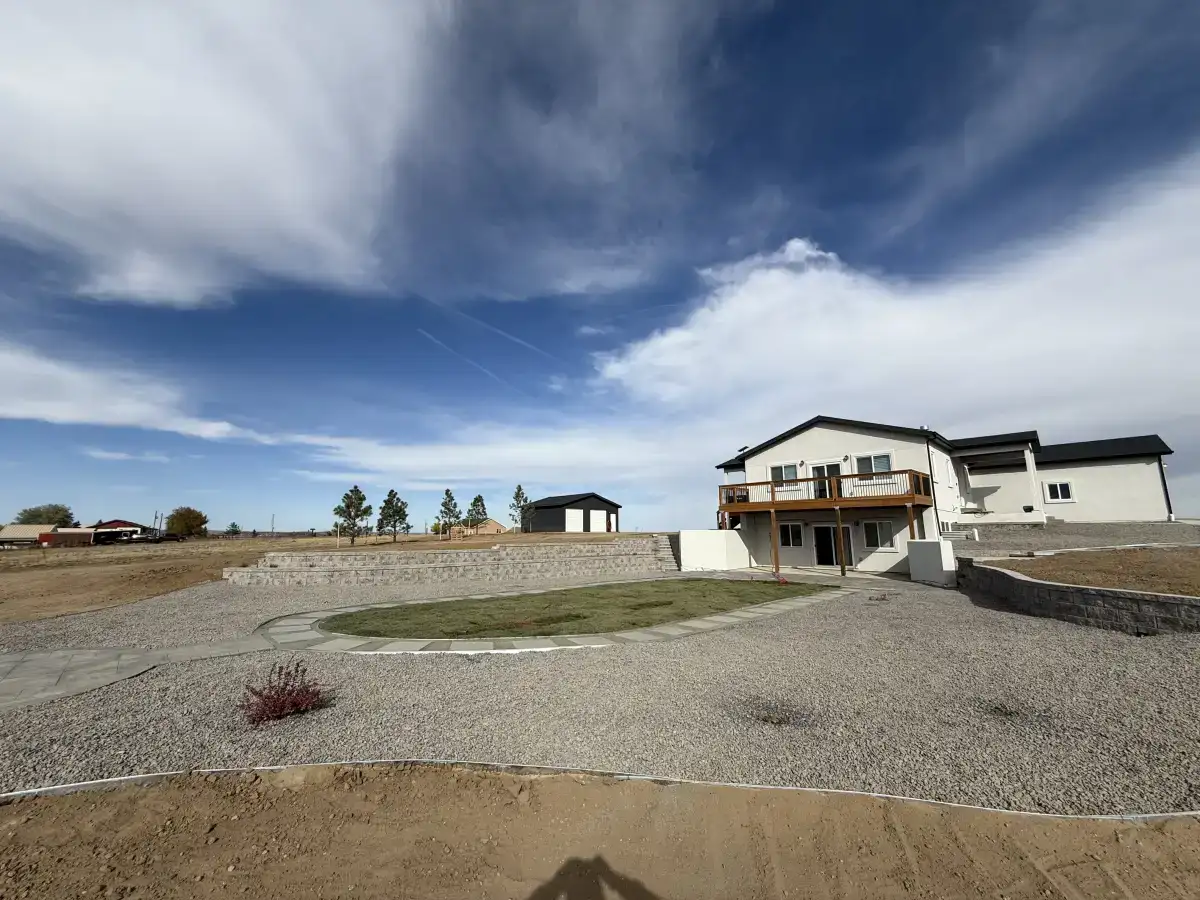
Before booking landscaping, Colorado Springs homeowners often ask for a price first. The more useful starting point is a defined result: what should the yard do better, which site conditions affect the work, and what exactly will the proposal include?
Those answers make estimates easier to compare. They also matter locally, where strong sun, wind, clay soil, sudden storms, and freeze-thaw movement can influence grading, drainage, irrigation, planting, lawn choices, and hardscape preparation. A site-specific conversation with a landscaping contractor gives you more decision value than a broad cost average.
1. What Should a Landscaping Estimate Include?
Start by confirming that the estimate describes the same finished result you have in mind. It should make the scope understandable: removal, grading, drainage, soil or base preparation, materials, installation, cleanup, and any irrigation changes that are part of the work. It should also identify selections or conditions that still need to be resolved.
This is especially important when several services meet in one space. A patio, planting bed, lawn, retaining edge, and lighting may look like separate line items, but their elevations, drainage, access, and installation order are connected.
2. What Do Landscapers Charge Per Hour?
There is no single hourly rate that describes every landscaping project. One number might cover one worker, while another reflects a crew, specialized equipment, hauling, disposal, supervision, or other operating costs. Material-heavy installations also cannot be compared on labor rate alone.
For a defined project, compare the complete scope, exclusions, material quantities, site preparation, and expected result. An hourly figure may be useful for limited time-and-material work, but it does not tell you whether two contractors are proposing the same installation.
3. Is $100 an Hour Too Much for Landscape Work?
An hourly figure cannot be judged without knowing what it represents. Ask whether it applies to an individual or a crew, what equipment is included, how materials and disposal are billed, and when the clock starts and stops. Then compare the likely total and the scope being delivered.
A lower hourly rate is not automatically a lower project cost if the proposal leaves out preparation or requires more hours. A higher rate is not automatically a better value. The useful question is whether the price and scope are clear enough for you to compare the same outcome.
4. What Drives Landscaping Cost in Colorado Springs?
Property conditions often have as much influence as the visible materials. Grade, drainage, demolition, soil preparation, gate width, distance from the street, material staging, irrigation changes, and the amount of base work can all affect the total. Sloped or access-limited yards may require a different installation plan than open, level properties.
Material choices matter too, but compare them in context. Decorative rock, sod, artificial turf, pavers, wall block, trees, and shrubs each require different preparation and aftercare. If your project will happen in phases, ask what foundational work should be completed now so finished areas do not have to be reopened later.
5. How Will Drainage Be Addressed Before Finish Work?
Show the contractor where water collects, where runoff enters or leaves the yard, and what happens during storms or snowmelt. In Colorado Springs, drainage is a planning issue that can affect lawns, planting beds, rock, patios, walls, and the area near the home.
Ask how the proposed grade will move water and how drainage details connect across the whole work area. Finish materials should not hide an unresolved low spot or interrupt an existing path that safely carries water.
6. What Grass Grows Best in Colorado Springs?
The best choice depends on the specific area rather than one citywide answer. Sun exposure, soil preparation, irrigation coverage, foot traffic, pets, appearance, and the amount of maintenance you want all matter. Ask why a grass or sod option fits your yard and what it will need during establishment and afterward.
If the lawn area is difficult to water or maintain, compare sod installation with lower-water planting, xeriscaping, rock, or artificial turf where appropriate. The right mix can vary across the same property.
7. Does the Irrigation Plan Match the New Landscape?
New lawn, trees, shrubs, and planting beds may not share the same watering needs. Ask whether the existing system can support the proposed layout, whether spray and drip areas need to be separated, and whether lines or sleeves should go in before hardscape or turf.
An irrigation conversation should happen while the layout is still flexible. Waiting until after patios, rock, sod, or beds are installed can make corrections more disruptive.
8. Who Handles Maintenance After Installation?
Before booking, clarify what the homeowner will need to do once the crew leaves. New sod, trees, shrubs, and seeded areas can have establishment needs. Rock and hardscape may need occasional cleanup or joint care. Irrigation schedules may need seasonal adjustment as plants establish and weather changes.
Ask for the care expectations that apply to the materials in your project. If ongoing maintenance is not part of the proposal, know which tasks remain your responsibility and when they begin.
9. How Do I Compare Landscaping Contractors?
Compare more than the final number. Look for a clear scope, direct answers about site preparation, realistic discussion of access and drainage, material-specific explanations, and a process for selections or changes. Ask what is included, what is excluded, and which assumptions could affect the proposal.
For a yard with several connected features, landscape design and installation can provide one coordinated plan. For a focused improvement, a single-service estimate may be enough. The right path depends on the number of decisions that need to work together.
Colorado Springs Landscaping FAQ
What do landscapers charge per hour in Colorado Springs?
There is no single reliable hourly rate for every project. Crew size, equipment, site access, demolition, hauling, base preparation, materials, irrigation, and finish work all affect the estimate. For installation work, compare the complete scope and exclusions rather than an hourly figure alone.
Is $100 an hour too much for landscape work?
An hourly number by itself does not show whether it covers one worker or a crew, equipment, disposal, supervision, or overhead. Compare what is included, the expected result, and how changes are handled before deciding whether a rate or proposal is reasonable.
How much does landscaping cost in Colorado?
Cost depends on the property and scope. Grading, drainage, access, removal, hardscape base work, irrigation changes, plant and turf choices, material quantities, and project phasing can all change the total. A site-specific estimate is more useful than a broad statewide average.
What grass grows best in Colorado Springs?
The right grass depends on sun, irrigation, soil preparation, traffic, appearance goals, and desired upkeep. Homeowners should ask which sod option fits the exact area and what watering and establishment care it will require.
Get Answers for Your Property
CN Landscaping LLC serves homeowners in Colorado Springs, Monument, Fountain, Falcon, Larkspur, Perry Park, and Black Forest. Tell the team what you want to change, what the yard does now, and which questions you want the estimate to answer.
Request a free landscaping estimate or call (719) 460-5685 to discuss your property.