
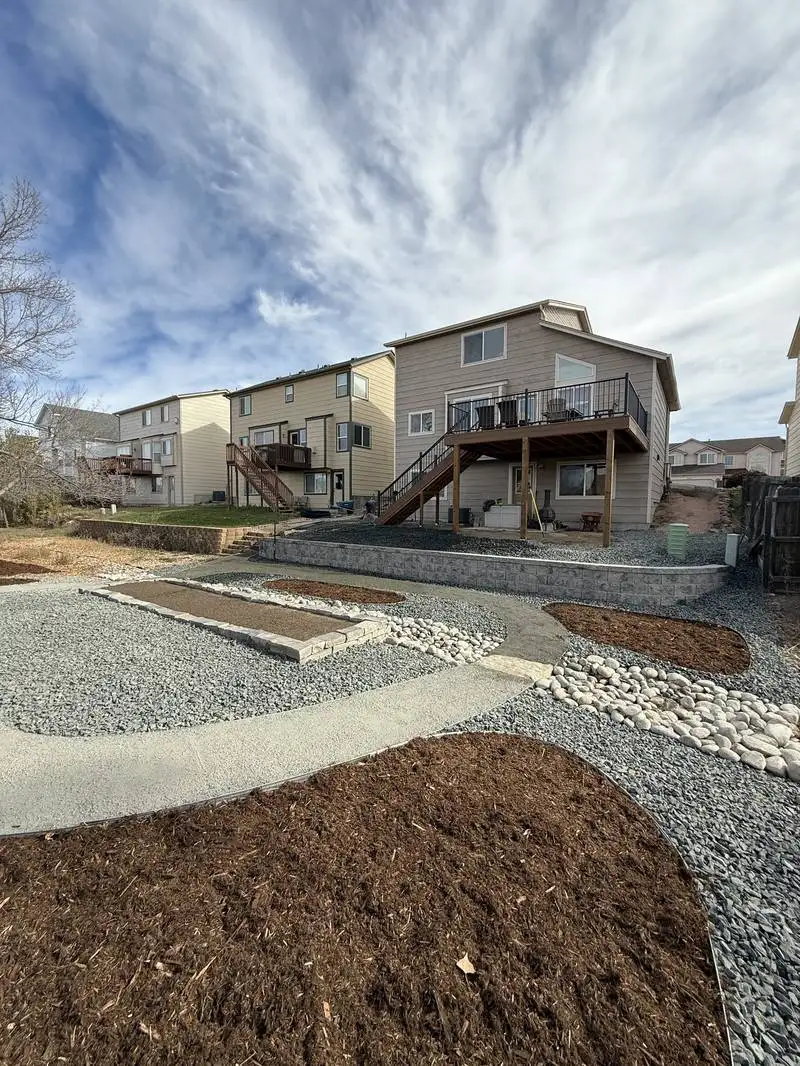
The single most important thing to get right when planning an outdoor kitchen in Colorado Springs is wind and weather protection. Our afternoon thunderstorms, chinook winds, and 300+ days of intense high-altitude sun will punish a poorly positioned kitchen faster than you might expect. Get the siting and shelter right first, and every other decision falls into place.
Outdoor kitchens are one of the fastest-growing outdoor living projects in the Pikes Peak region, and for good reason. Colorado Springs averages more than 240 sunny days per year. That is more sunshine than Miami. Homeowners who invest in a well-built outdoor kitchen routinely use it from April through October — and with the right overhead shelter and a built-in fire feature, even through the winter months.
This guide walks through the full planning process, from choosing the right location on your property to selecting materials that hold up at altitude, picking appliances that perform in thin air, and understanding what a project like this costs in the Colorado Springs market.
Choosing the Right Location
Where you place your outdoor kitchen on your property affects how much you use it, how long it lasts, and how much it costs to build. Here are the factors that matter most in Colorado Springs.
Wind Exposure
Colorado Springs sits in a corridor between the Front Range and the plains, which funnels chinook winds through neighborhoods at 40-60 mph regularly. Your outdoor kitchen should be positioned on the lee side of your house (typically the east or south side), against an existing structure, or backed by a solid wall or windbreak. An exposed kitchen on a west-facing hillside in Monument or Black Forest will be unusable during half the days you want to cook outside.
If your property does not offer natural wind protection, a well-designed pergola with adjustable louvers, a solid knee wall on the windward side, or a combination of both can create a usable cooking environment even on breezy afternoons. Plan this into the landscape design from the beginning rather than adding it later.
Proximity to Your Indoor Kitchen
Place your outdoor kitchen within 30-50 feet of your back door if possible. Every trip indoors to grab a forgotten ingredient, utensil, or drink adds friction that reduces how often you actually use the space. Closer proximity also simplifies utility runs — water supply lines, gas lines, and electrical conduit all cost more per linear foot of trench.
Sun and Shade Patterns
At 6,035 feet, UV intensity is roughly 25% higher than at sea level. Cooking and entertaining in direct afternoon sun from May through September is genuinely uncomfortable. Observe your yard at 4-6 PM on a sunny day — that is when you will use the kitchen most. If that area is in full sun, plan for shade. A pergola, shade sail, or covered roof structure is not optional in Colorado Springs. It is a core part of the build.
Grade and Drainage
Outdoor kitchens require a level, stable surface. If your yard slopes (common throughout the Pikes Peak region, especially in Perry Park, Black Forest, and Larkspur), you may need a retaining wall to create a level pad. Build in at least a 1-2% slope away from the kitchen for drainage so monsoon-season downpours do not pool around your base cabinets and appliances.
Materials That Handle Colorado Conditions
Colorado Springs puts outdoor materials through an annual cycle that most other climates do not match: 50-degree temperature swings in a single day, freeze-thaw cycling from October through April, intense UV, low humidity, alkaline soil, and hailstorms. Choose materials that handle all of it.
Countertops
Granite is the most reliable countertop material for outdoor kitchens at altitude. It handles freeze-thaw without cracking, resists UV fading, and is impervious to stains when sealed annually. Quartzite is a close second. Avoid engineered quartz (Caesarstone, Silestone) outdoors — the resin binders break down under UV exposure and temperature extremes, causing yellowing and surface cracking within 2-3 years.
Concrete countertops work well if properly sealed and are more affordable than natural stone. They do require resealing every 1-2 years to prevent moisture infiltration and freeze damage. Tile countertops are the most budget-friendly option but grout lines trap moisture and are vulnerable to freeze-thaw cracking.
Base Structure
The most durable outdoor kitchen bases in Colorado Springs are built from concrete block or steel stud framing with cement board sheathing, then veneered with natural stone or manufactured stone. Treated wood framing is not recommended — it warps, rots at joints, and creates fire risk near a grill.
Stone veneer should be a full-depth natural stone (not thin-cut adhesive veneer) or a quality manufactured stone rated for freeze-thaw. Colorado Red sandstone, moss rock, and ledge stone are all popular choices that complement the local landscape. The veneer you choose should tie visually into your existing hardscaping — matching your patio pavers or retaining wall stone creates a cohesive look across the entire outdoor living space.
The Cooking Surface (Patio)
Your outdoor kitchen needs a solid patio as its base. Concrete pavers with a proper compacted base (6-8 inches of road base, 1 inch of leveling sand) handle freeze-thaw well and allow you to replace individual pavers if needed. Poured concrete with expansion joints is a lower-cost option but cracks are inevitable in Colorado's climate — plan for them with proper joint spacing. Flagstone on a concrete base is the premium choice, offering both durability and a natural look that fits the Colorado aesthetic.
Appliances at Altitude
Cooking at 6,000+ feet is measurably different from cooking at sea level. Air pressure is roughly 18% lower, which affects combustion, boil times, and baking. This matters for your appliance selection.
The Grill
A built-in gas grill is the centerpiece of most outdoor kitchens. At altitude, grills produce less heat per BTU because there is less oxygen for combustion. Buy a grill with at least 60,000 BTU for a standard 4-burner unit — what feels adequate at sea level will underperform here. Many premium grill manufacturers (Lynx, DCS, Hestan) offer high-altitude orifice kits that adjust the gas-to-air ratio for optimal flame at elevation. Ask your dealer specifically about altitude adjustment before purchasing.
Natural gas is preferred over propane for a built-in kitchen because you never run out mid-cookout. Colorado Springs Utilities serves natural gas to most areas. If natural gas is not available on your property (common in Falcon, Black Forest, and some Larkspur lots), install a 250- or 500-gallon propane tank with a permanent line rather than relying on 20-pound exchange tanks.
Side Burners and Pizza Ovens
Side burners are useful for boiling water (which takes longer at altitude — water boils at 202 degrees here versus 212 at sea level), sauces, and side dishes. A wood-fired pizza oven is a popular addition in Colorado Springs — it doubles as a heat source during shoulder-season evenings, extending the usable season well into October and even winter for dedicated outdoor cooks.
Refrigeration
An outdoor-rated undercounter refrigerator is the single upgrade that most increases how often you use your kitchen. It eliminates 80% of trips back inside. Choose a unit rated for outdoor use with a temperature operating range down to 0 degrees Fahrenheit — standard indoor refrigerators will fail in Colorado winters even if stored under a covered structure. Expect to spend $800-2,500 for a quality outdoor-rated unit.
Utility Connections
Every outdoor kitchen needs at minimum:
- Gas line — natural gas or propane, properly sized for total BTU load (grill + side burner + fire pit if included)
- Electrical — at least one dedicated 20-amp GFCI circuit for refrigeration, lighting, and outlets. Two circuits are better.
- Water supply — a cold-water line with a shutoff valve for a prep sink. Hot water is optional but adds a dedicated line and water heater cost.
- Drain — a sink drain needs to connect to your sewer/septic system. This is the utility that often adds the most cost because it requires trenching and grade.
All utility work requires permits from Pikes Peak Regional Building Department. Gas lines must be installed by a licensed plumber or gas fitter. Electrical must be permitted and inspected. Budget $2,500-6,000 for utility rough-in depending on distance from the house and complexity.
Lighting the Space
An outdoor kitchen without proper landscape lighting is unusable after sunset, which means you lose the entire second half of summer evenings. Plan lighting in three layers:
- Task lighting — LED strips or puck lights under the pergola or countertop overhang, illuminating the cooking and prep surfaces
- Ambient lighting — string lights, pendant lights, or recessed soffit lights in any overhead structure to set the mood for dining
- Accent lighting — path lights leading to the kitchen, uplights on nearby trees or walls, and step lights on any grade changes
Use LED fixtures rated for outdoor use. At altitude, where temperatures can swing from 90 degrees to 40 degrees in a single evening, cheap fixtures fail quickly. Wire everything to a dedicated circuit with a dimmer or smart switch for flexibility.
How Much Does an Outdoor Kitchen Cost in Colorado Springs?
Outdoor kitchen costs in the Colorado Springs market vary widely based on size, materials, and appliance choices. Here are realistic ranges based on projects we see across the Pikes Peak region:
- Basic setup (built-in grill, small counter, stone base, no utilities): $8,000-15,000
- Mid-range (grill, side burner, sink, refrigerator, granite counters, pergola, utilities): $25,000-45,000
- Premium (full kitchen with pizza oven, bar seating, fire feature, covered structure, lighting, full utilities): $50,000-85,000+
Labor typically accounts for 40-50% of total cost. Material costs are slightly higher in Colorado Springs than the national average due to freight to our inland, high-altitude location. However, the usable outdoor season here (April through October, 7+ months) means the cost-per-use is actually lower than many coastal markets where humidity and mosquitoes limit outdoor cooking to 4-5 months.
Timeline and When to Start
An outdoor kitchen project takes 4-8 weeks from breaking ground to firing up the grill, depending on complexity and permit timelines. If you want to cook outdoors by the Fourth of July, you need to be in the design phase now and breaking ground by late May.
May and early June are the ideal construction window in Colorado Springs. The ground has fully thawed, afternoon thunderstorms have not yet hit their peak frequency (that comes in July), and there is enough lead time to finish before the prime entertaining season. Projects that start in July or August often push into fall, and you lose weeks to monsoon-season rain delays.
Permitting through Pikes Peak Regional Building Department typically takes 2-4 weeks. A good contractor submits permits during the design phase so construction can start as soon as plans are approved.
Start Planning Your Outdoor Kitchen
The best outdoor kitchens in Colorado Springs are the ones designed for how people actually live here — with wind protection, altitude-adjusted appliances, materials that survive freeze-thaw, and enough shelter to cook comfortably through our intense afternoon sun. They also tie seamlessly into the surrounding landscape, connecting the kitchen to the patio, fire pit, seating walls, and plantings that make the entire backyard feel like a single, intentional space.
CN Landscaping designs and builds complete outdoor living spaces across Colorado Springs, Monument, Fountain, Falcon, Black Forest, Larkspur, and Perry Park. We handle everything from the initial site assessment and design through hardscape construction, utility coordination, and finish details — one team, one plan, one point of contact.
Call (719) 460-5685 or request a free estimate online to start the design conversation before the best building window closes.