Choosing the right retaining wall material in Colorado means accounting for freeze-thaw cycles, expansive clay soils, and elevation-related drainage challenges that do not exist in most other markets.
A retaining wall that performs well in Texas or California may fail within a few years in Colorado Springs. Our soil freezes to a depth of 30 inches or more, and the daily temperature swings in spring and fall can cycle through freezing and thawing multiple times per week. The material you choose must handle that punishment for decades.
Concrete Block (Segmental Retaining Wall)
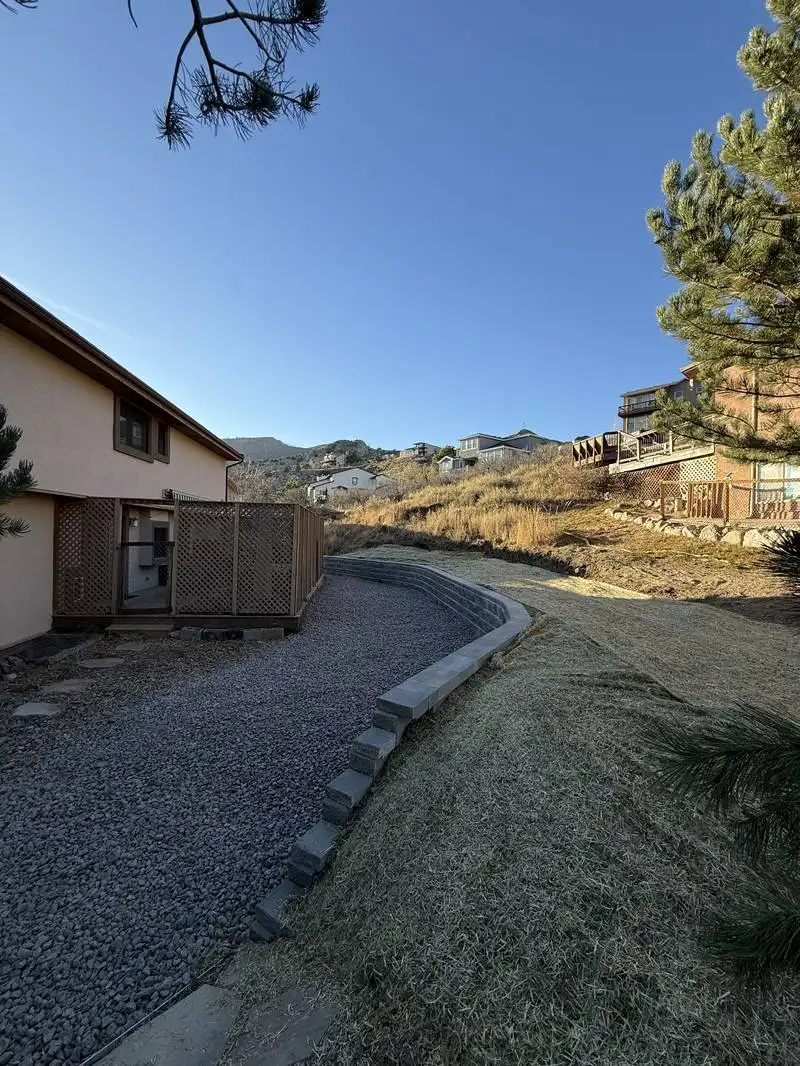
Concrete block is the most common retaining wall material in the Colorado Springs market, and for good reason. Modern segmental retaining wall (SRW) blocks are specifically engineered for structural performance and durability.
Pros
- Freeze-thaw durability: Quality SRW blocks are rated for 100+ freeze-thaw cycles per year. They are manufactured with low water absorption rates (typically under 5%), which is the key factor in freeze-thaw resistance.
- Consistent sizing: Uniform block dimensions make construction faster and more predictable than natural stone.
- Engineered designs available: Major manufacturers provide wall designs certified by professional engineers for heights up to 6 feet without additional engineering, and taller walls with geogrid reinforcement.
- Wide style range: Modern blocks come in textures that convincingly mimic natural stone, from smooth contemporary to rough-split rustic faces.
Cons
- Manufactured appearance: Even the best textured blocks look manufactured up close. If a completely natural aesthetic is the priority, stone is the better choice.
- Color fading: Colorado's intense UV exposure at altitude can fade pigmented blocks faster than at sea level. Choose through-body color blocks rather than surface-coated options.
Segmental block, natural stone, and timber serve different structural and design needs on Colorado properties.
Natural Stone
Natural stone retaining walls are a premium choice that blends seamlessly with Colorado's rocky landscape. Local stone options include Colorado buff sandstone, Lyons red sandstone, and various granite varieties from Front Range quarries.
Pros
- Unmatched aesthetics: Nothing looks as natural as actual stone. Colorado sandstone and granite complement the existing landscape in a way manufactured products cannot match.
- Excellent durability: Colorado sandstone and granite have been surviving local freeze-thaw cycles for millions of years. Properly installed, a natural stone wall will outlast any manufactured alternative.
- Site conditions: Access, slope, drainage, soil, and preparation needs are confirmed during the property review.
- No color fading: Natural stone color is permanent. UV, rain, and age only add character.
Cons
- Materials: Product type, finish, durability, and installation requirements are selected for the site and intended use.
- Slower installation: Each stone must be individually selected and placed. A stone wall takes roughly twice the labor hours of a comparable block wall.
- Variable stone quality: Not all natural stone handles freeze-thaw equally. Limestone and some soft sandstones can spall (flake) in Colorado conditions. Stick with dense sandstone or granite.
Every wall plan addresses base preparation, gravel backfill, drainage, reinforcement, and freeze-thaw movement.
Timber (Landscape Timbers and Railroad Ties)
They are less common today due to durability concerns, but still have a place in certain applications.
Pros
- Project scope: Removal, grading, base work, installation, cleanup, and optional features are documented before work begins.
- Phasing: Larger projects can be organized in a practical sequence that protects completed work and keeps the design cohesive.
- Rustic aesthetic: In mountain or cabin-style properties, timber walls complement the architecture better than block.
Cons
- Limited lifespan: Even pressure-treated timbers in Colorado's dry climate last 15-20 years before rot, warping, and insect damage require replacement. In contact with Colorado's alkaline clay soils, the lifespan can be shorter.
- Structural limitations: Timber walls are not recommended above 4 feet in height. They lack the mass and interlocking geometry needed for taller structural applications.
- Freeze-thaw movement: Timber walls are more susceptible to movement from soil expansion and frost heave than masonry walls because they lack the weight to resist lateral forces.
- Environmental concerns: Pressure-treated wood contains chemicals that leach into soil over time. Avoid using near vegetable gardens or water features.
Wall height, length, soil pressure, drainage, material, access, demolition, and engineering requirements shape the final scope.
Gabion Walls (Wire Cages Filled with Rock)
Gabion walls are wire mesh cages filled with rock or cobble. They have gained popularity in modern landscape design for their industrial-contemporary aesthetic and excellent drainage properties.
Pros
- Superior drainage: Gabion walls are inherently permeable. Water passes directly through them, eliminating the hydrostatic pressure that causes many retaining wall failures. This is a significant advantage in Colorado where spring snowmelt and summer storms saturate soil behind walls.
- Flexible structure: Gabion walls can tolerate ground movement and settling better than rigid masonry walls. On Colorado's expansive clay soils, this flexibility is an asset.
- Modern aesthetic: For contemporary homes and commercial properties, gabion walls offer a clean, architectural look that pairs well with modern landscaping.
- Proposal details: The final estimate reflects the approved plan and the conditions observed on site.
Cons
- Wire corrosion: The galvanized wire baskets will eventually corrode, typically after 20-30 years.
- Not for all aesthetics: Gabion walls look industrial by nature. They work for modern and contemporary designs but are out of place in traditional or rustic settings.
- Vegetation issues: Weeds and grasses grow in the gaps between rocks, requiring periodic maintenance or use of landscape fabric backing.
Gabion construction is most appropriate when free drainage and a deliberately modern, rock-filled appearance support the larger landscape design.
Material Comparison Table
| Material | Site-specific | Lifespan | Freeze-Thaw Rating |
|---|---|---|---|
| Concrete Block | Site-specific | 50+ years | Excellent |
| Natural Stone | Site-specific | 75+ years | Excellent |
| Timber | Site-specific | 15 - 20 years | Fair |
| Gabion | Site-specific | 30 - 40 years | Good |
When Do You Need an Engineer?
In Colorado Springs, the Pikes Peak Regional Building Department requires a permit and engineered design for retaining walls over 4 feet in exposed height. However, there are situations where engineering is smart even for shorter walls:
- Surcharge loads: If a driveway, patio, or structure sits on top of or near the wall, the additional weight (surcharge) changes the structural requirements significantly.
- Sloped sites: Walls built on sloped terrain face different forces than walls on flat ground. Multiple terraced walls also interact structurally.
- Expansive soils: If your soil test shows high expansion potential (common in east-side neighborhoods like Falcon and Black Forest), an engineer can specify the right base and drainage system to prevent heaving.
- Near property lines: Walls near property boundaries may have setback requirements and liability considerations that an engineer's stamp addresses.
An engineer can translate these loads and soil conditions into footing, reinforcement, setback, and construction requirements for the specific site.
Drainage Behind Every Wall
Regardless of which material you choose, drainage behind the wall is the single most important factor in long-term performance. Every retaining wall in Colorado Springs needs:
- Drain aggregate: A minimum 12-inch zone of clean, free-draining gravel behind the wall from base to within 6 inches of the top.
- Drain pipe: A perforated 4-inch drain pipe at the base of the wall, sloped to daylight or a drainage outlet.
- Filter fabric: Non-woven geotextile fabric between the drain aggregate and native soil to prevent clay migration into the drainage layer.
- Surface drainage: Grading behind the wall to direct surface water away from the wall face.
Skipping or cutting corners on drainage is the number one cause of retaining wall failure in Colorado. The combination of clay soil expansion, freeze-thaw cycles, and storm water creates enormous hydrostatic pressure behind a wall. Without proper drainage, even the strongest wall material will eventually fail.
Get a Retaining Wall Estimate
CN Landscaping builds retaining walls in all four materials across Colorado Springs, Monument, Fountain, and the surrounding areas. We evaluate your site conditions, soil type, wall height, and aesthetic goals to recommend the right material for your specific project.
Every wall we build includes full drainage systems, proper base preparation, and compaction testing. We handle permitting for walls requiring engineered designs and coordinate with structural engineers when needed.
Call (719) 460-5685 or request a free estimate to discuss your hardscaping project.