
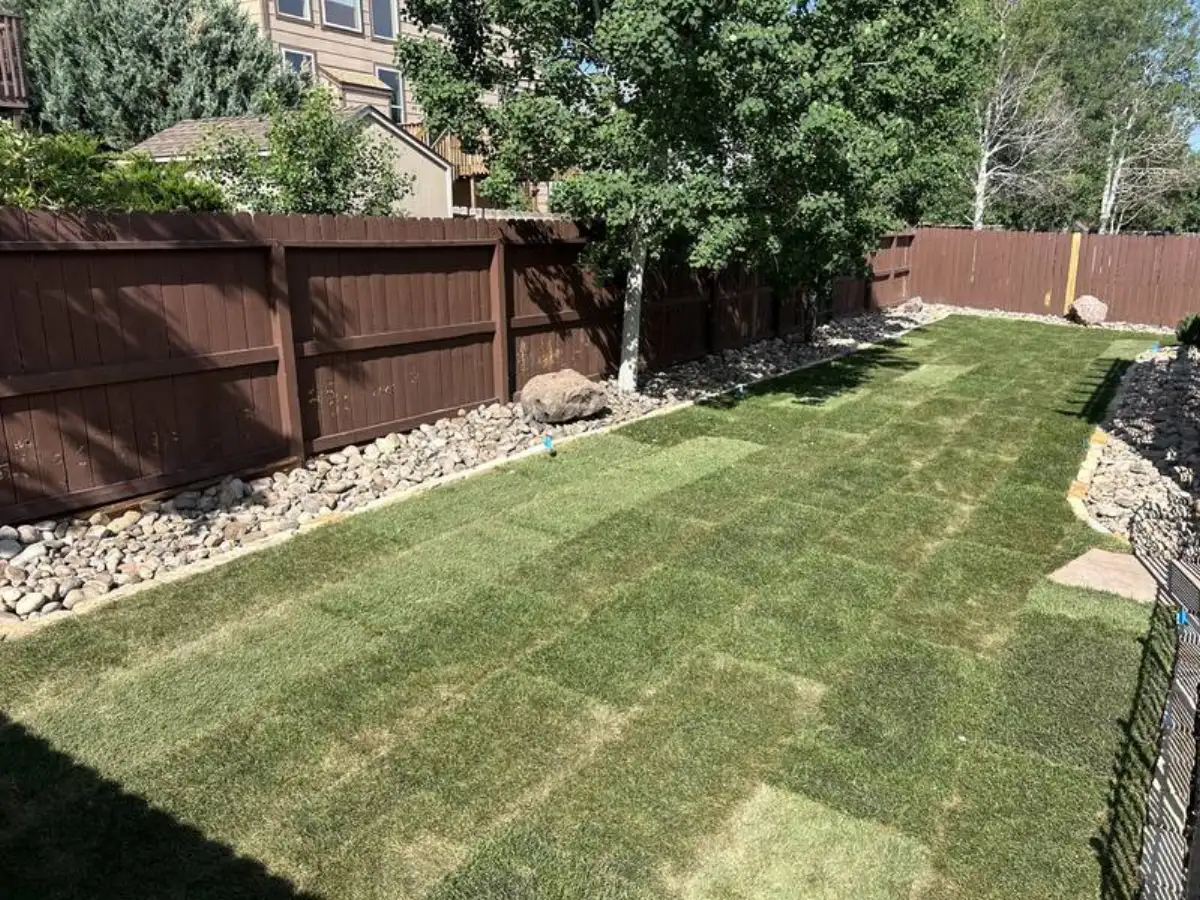
There is no honest flat price for sod installation based on lawn size alone. A prepared, accessible yard with working irrigation costs less to complete than the same square footage with failed turf to remove, compacted soil to correct, low spots to grade, or sprinkler coverage to repair.
For a useful Colorado Springs estimate, treat sod as one line in a complete lawn-installation scope. The total should reflect the condition of your yard before the rolls arrive and the work required to help new roots establish afterward. CN Landscaping provides site-specific estimates for professional sod installation rather than publishing a one-size-fits-all rate.
How Much Does 1,000 Square Feet of Sod Cost?
A 1,000-square-foot measurement gives a contractor the starting turf quantity, but it does not answer the installed-cost question by itself. The estimate also needs to account for fitting and cuts, delivery, the existing surface, soil condition, grade, access, irrigation, and cleanup.
That is why two 1,000-square-foot yards can receive different totals. One may be bare, evenly graded soil reached through a wide gate. The other may require old-lawn removal, hauling, soil improvement, drainage correction, sprinkler-head changes, and hand movement through a narrow side yard. Both need sod, but they do not require the same installation.
The Seven Parts of a Complete Sod Estimate
| Estimate item | What the contractor evaluates | Why it affects cost |
|---|---|---|
| Measured area | The actual lawn shape, edges, curves, and small sections | The measured area determines the base quantity, while cuts and fitting affect how much must be ordered. |
| Removal and disposal | Existing grass, weeds, roots, rock, debris, and haul-out needs | A yard ready for preparation requires less labor and disposal than a full lawn replacement. |
| Soil and grade | Compaction, low spots, drainage paths, topsoil condition, and final smoothness | New sod needs consistent contact with a prepared bed; correcting the surface adds material, equipment, and labor. |
| Sod and delivery | Grass selection, order size, delivery distance, and installation timing | Fresh sod must be coordinated with site readiness so it can be laid and watered promptly. |
| Irrigation | Coverage, pressure, head location, leaks, controller settings, and needed repairs | A coverage check is different from relocating heads, repairing lines, or adding a zone. |
| Access | Gate width, slopes, steps, staging space, and distance from truck to lawn | Restricted access can change how soil, debris, and sod are moved through your yard. |
| Finish and cleanup | Laying, seam fitting, edge cutting, rolling, first watering, and jobsite cleanup | A delivered pallet is not the same scope as a finished lawn ready for establishment care. |
What Usually Moves the Estimate Up or Down?
Prepared and easy to reach
Bare or readily removable surface, workable soil, simple lawn shape, usable access, sound drainage, and irrigation that already covers the new lawn evenly.
Replacement with corrections
Old turf removal, routine soil preparation, fine grading, several curves or borders, limited staging space, or a few irrigation adjustments.
Site work before the lawn
Compacted soil, drainage trouble, meaningful grade changes, extensive removal, restricted access, irrigation repairs, or coordination with other landscape work.
Can You Lay Sod Directly Over Dirt?
Bare dirt is a starting condition, not a finished sod bed. Weeds and debris may need removal. Compacted areas may need loosening or soil improvement. High and low spots need attention so water does not run off one section and collect in another. The surface also needs to meet walks, patios, edging, and sprinkler heads at a workable finished height.
Skipping those steps can make the first price look lower while leaving visible seams, uneven watering, poor root contact, or drainage problems beneath the lawn. Ask the estimator to describe the preparation included instead of accepting a line item that says only “install sod.”
Timing Affects Risk More Than the Sod Price
Spring and early fall are often more forgiving establishment periods along the Front Range because the weather is milder. Sod can also be installed outside those windows when the ground is workable and the watering plan is realistic, but hot, dry conditions leave less margin for a missed cycle.
The best date is one when site preparation is complete, fresh sod is available, irrigation is ready, and you can protect the lawn from traffic while roots begin to establish. For a fuller discussion of grass selection, installation, and early care, read the Colorado Springs sod installation guide.
How to Compare Sod Installation Quotes
Compare the same finished result, not two totals with different assumptions. A clear proposal should identify:
- the measured lawn area and sod type;
- whether existing lawn, weeds, rock, roots, or debris will be removed and hauled away;
- the soil preparation and grading included;
- delivery, installation, seam fitting, edge cutting, rolling, and cleanup;
- what irrigation testing or correction is included;
- who handles the first watering and what care you take over afterward; and
- which site conditions could require a written change to the scope.
If an estimate is substantially lower, use that list to find the difference. It may be a genuine efficiency, or it may omit removal, soil, delivery, irrigation, disposal, or finishing work that another proposal includes.
When Sod Is Not the Only Option
Sod is useful when you want immediate coverage and are prepared to water through establishment. Seed can reduce the initial material expense but takes longer to fill in and needs protection while it germinates. Artificial turf removes routine lawn watering but has a different base, drainage, cleaning, and upfront-cost profile. A smaller lawn paired with xeriscaping may fit a yard where you want green space for use without irrigating every open area.
The right comparison is not simply which surface costs less on installation day. Consider how quickly you need coverage, how the area will be used, irrigation availability, sun, traffic, pets, and the maintenance you want to take on.
Frequently Asked Questions
How much does 1,000 square feet of sod cost?
A 1,000-square-foot measurement is the starting quantity, not a complete installed price. A useful estimate also accounts for cuts and fitting, removal and disposal, soil preparation, grading, sod type, delivery, installation, irrigation corrections, access, and establishment care. Two yards with the same measured area can therefore have different totals.
How much should I pay for sod installation?
Compare written estimates for the same finished scope rather than choosing from a broad online average. Confirm the measured area, sod and delivery, removal, soil and grading work, irrigation adjustments, installation, rolling, cleanup, and care instructions so you can see what each total includes.
Can sod be laid directly over dirt?
Bare dirt still needs evaluation and preparation. Weeds, debris, compaction, uneven grade, poor drainage, and dry soil can prevent consistent root contact or watering. The bed should be prepared and irrigation coverage checked before fresh sod arrives.
What is the best month to lay sod in Colorado?
Spring and early fall are often easier establishment periods along the Front Range because temperatures are milder. The right installation date still depends on workable soil, sod availability, irrigation readiness, and whether you can follow the initial watering plan.
Does a sod estimate include irrigation work?
Not automatically. Ask whether the estimate includes only a coverage check or also sprinkler-head relocation, repairs, controller changes, or new zones. These items should be identified separately so the sod and irrigation scopes are clear.
Get a Site-Specific Sod Estimate
CN Landscaping serves homeowners in Colorado Springs, Monument, Fountain, Falcon, Black Forest, Larkspur, and Perry Park. A site visit can turn your lawn measurement into a scope that accounts for the preparation, access, irrigation, and finish your yard requires.
Request a free sod installation estimate or call (719) 460‑5685 to discuss your yard.