
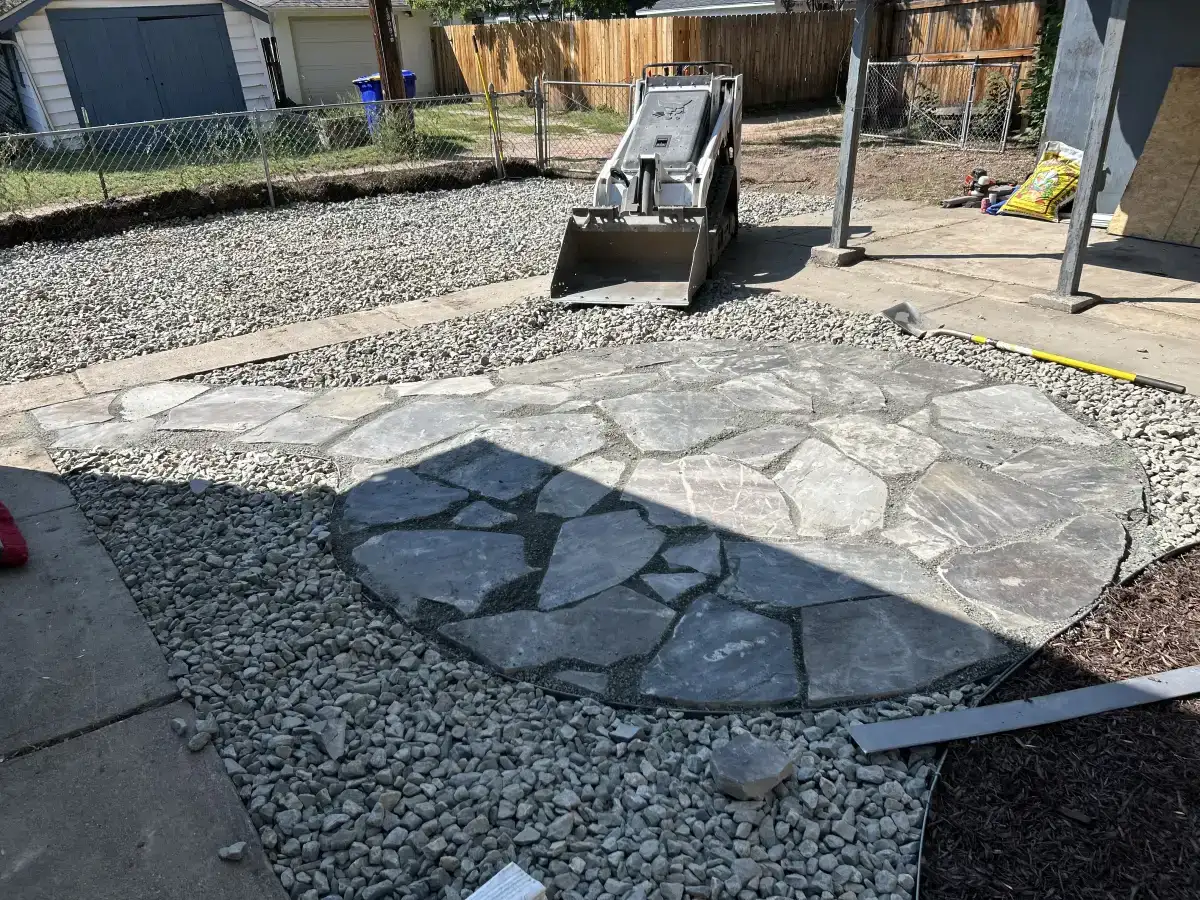
Patio Installation in Colorado Springs
Custom paver patios, natural flagstone, and stone outdoor living spaces engineered for 6,035 feet of elevation, 200+ freeze-thaw cycles, and Colorado's expansive clay soil. Built by CN Landscaping's in-house crew.
Why Patio Installation in Colorado Springs Requires Local Expertise
A patio that lasts in Colorado Springs is not the same as a patio that lasts in Denver, Kansas City, or Dallas. At 6,035 feet elevation, our city's unique combination of expansive clay soils, 200+ freeze-thaw cycles per year, intense UV radiation, and dramatic temperature swings creates conditions that expose poorly built patios within their first winter. CN Landscaping builds patios specifically engineered for these challenges, using base systems, material selections, and installation techniques proven across hundreds of projects in the Pikes Peak region.
Colorado Springs' clay soil is the single biggest factor in patio longevity. The expansive bentonite clay found across El Paso County absorbs moisture and swells when wet, then shrinks and cracks during dry periods. This seasonal expansion and contraction cycle generates enormous forces — enough to crack poured concrete, heave improperly supported pavers, and destroy stamped concrete finishes. Our patio installation process begins with excavating below the clay layer and building a stable base that isolates the patio surface from the soil movement below.
We install patios across every Colorado Springs neighborhood, from the luxury estates along The Broadmoor and Cheyenne Mountain to family homes in Briargate, Northgate, and Wolf Ranch. Each area presents slightly different soil conditions, drainage patterns, and HOA requirements — and our team knows the specific demands of each community from years of local experience.
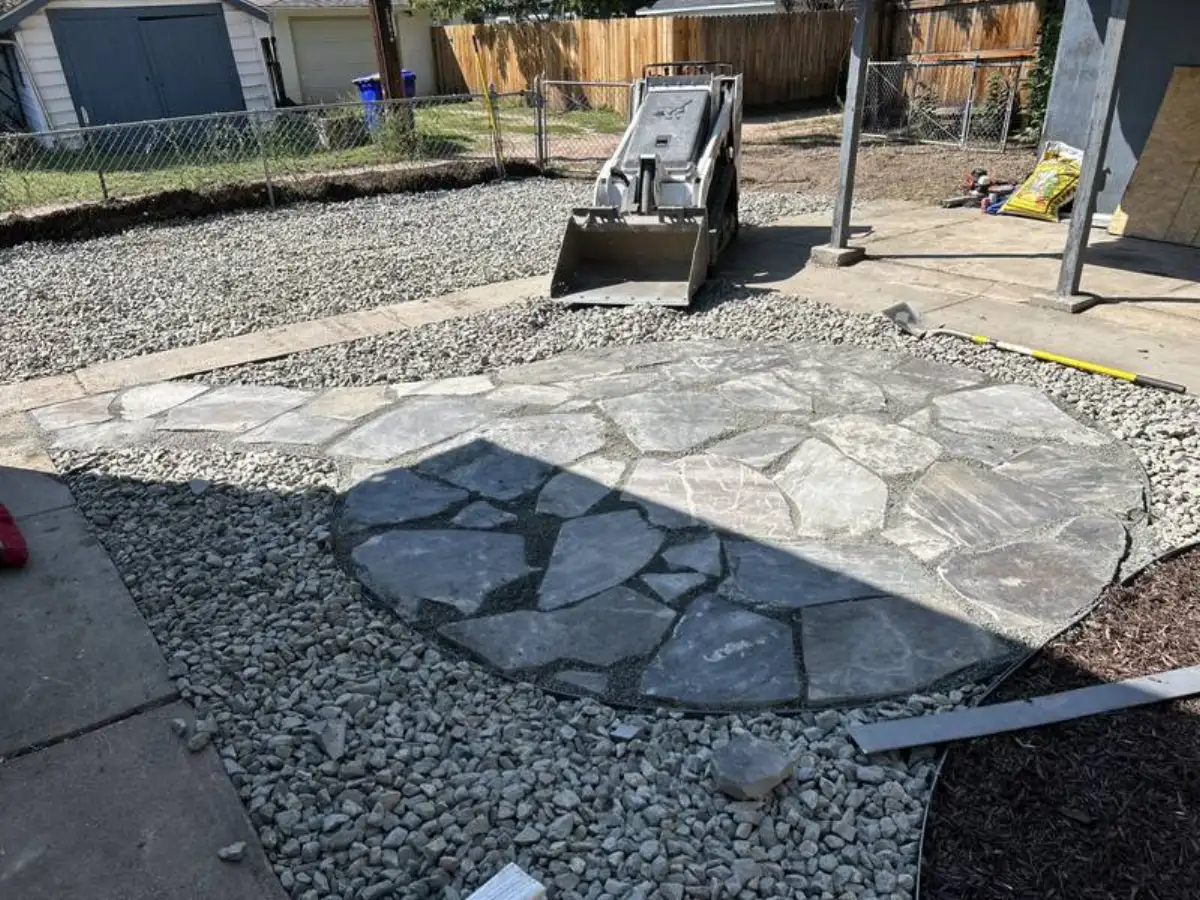
Patio Materials That Last in Colorado Springs
We work with three primary material categories, each with specific advantages and considerations for installation at 6,035 feet.
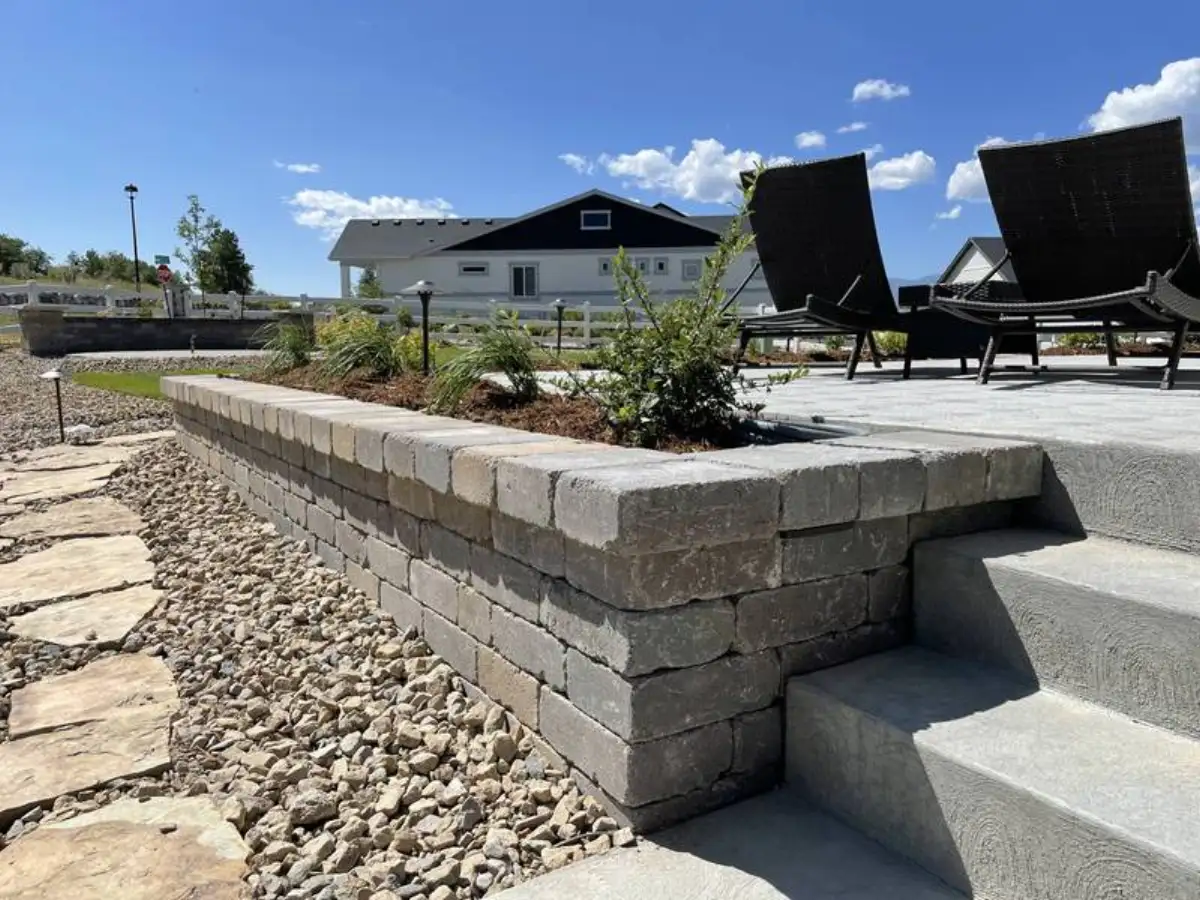
Interlocking Concrete Pavers
The most popular choice for Colorado Springs patios. Interlocking pavers rated for 8,000+ PSI crush strength handle our freeze-thaw cycles without cracking, and the joint system allows the surface to flex with seasonal ground movement. If a single paver is ever damaged — from dropped grills, falling tree limbs, or heavy furniture — it can be replaced individually without disturbing the surrounding surface. Available in dozens of colors, patterns, and textures, from contemporary linear designs to traditional herringbone and basketweave layouts. Polymer-modified joint sand prevents weed growth and ant intrusion while allowing water to drain through the surface.
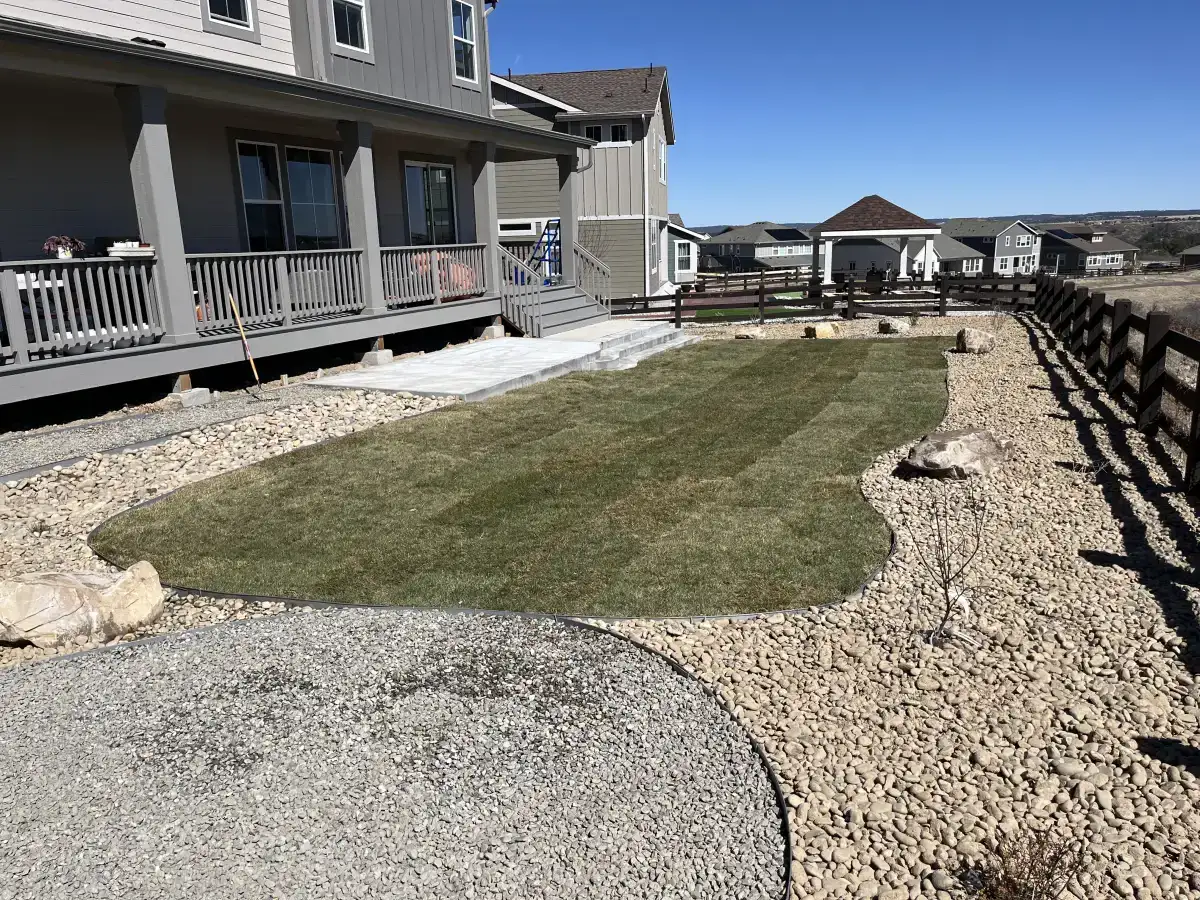
Natural Flagstone
Colorado sandstone flagstone is a naturally freeze-thaw resistant material that blends with the regional landscape. Each piece is unique in color and shape, creating one-of-a-kind patios with organic, irregular patterns. We source flagstone from Colorado quarries — Lyons red sandstone, Buff sandstone, and multi-color varieties — ensuring authenticity and suitability for local conditions. Flagstone patios can be dry-set on a compacted gravel base for a natural, low-maintenance finish or wet-set on a concrete slab for a more formal, level surface. Most Colorado Springs homeowners prefer dry-set flagstone because the flexible installation handles ground movement better than rigid mortar joints.
Natural Stone Slabs
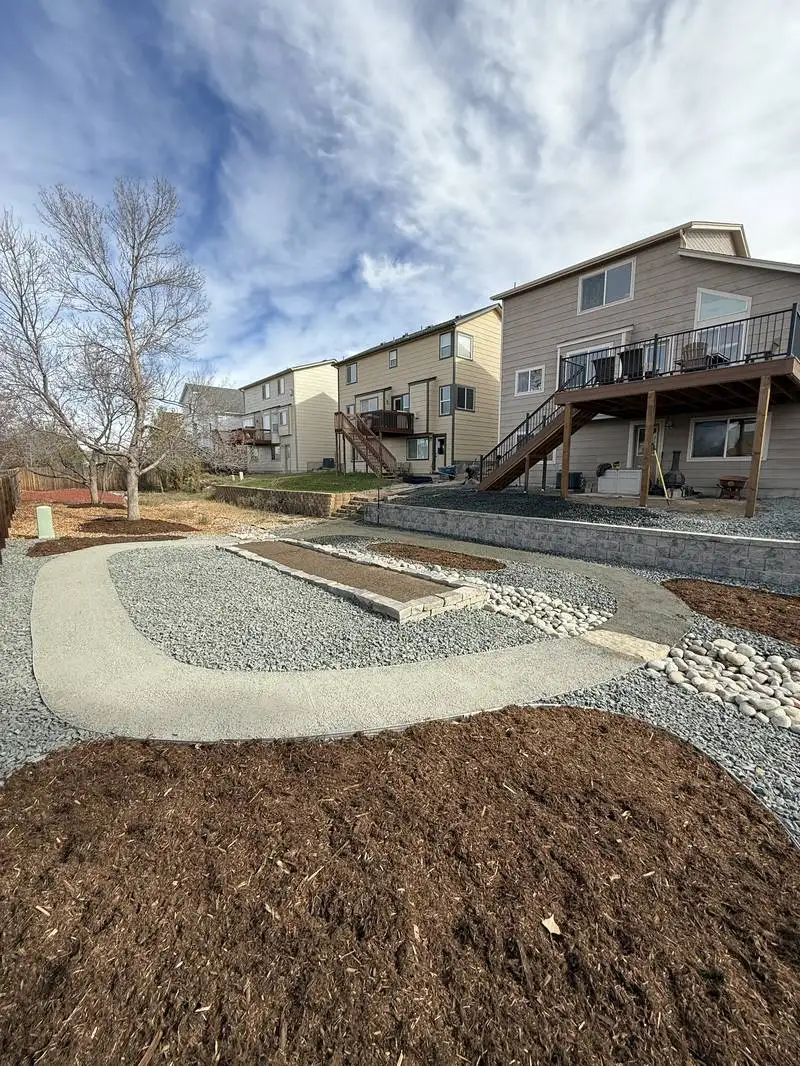
For homeowners seeking a premium, modern aesthetic, large-format natural stone slabs create a clean, contemporary outdoor surface. We install Colorado sandstone slabs, porcelain pavers designed to mimic travertine and natural stone, and select quartzite varieties rated for freeze-thaw climates. Large-format installations require precision leveling and a robust base system since each piece covers more surface area and leaves less room for adjustment. The result is a sophisticated outdoor living surface that rivals interior flooring quality while standing up to Colorado Springs' demanding climate conditions year after year.
Patio Installation Across Colorado Springs Neighborhoods
Soil conditions, lot configurations, and community standards vary significantly across the city. Here is how we approach patio projects in Colorado Springs' major neighborhoods.
Flying Horse and Northgate Estates
The Flying Horse community, anchored by the Flying Horse Club, sets the highest standard for outdoor living in Colorado Springs. Patio projects here regularly exceed 600 square feet and include integrated features like built-in seating walls, outdoor fireplaces, and connections to outdoor kitchens. The lots offer sweeping views of the Air Force Academy and Rampart Range that we design around — orienting patios to capture sunset views while providing windbreaks against the prevailing westerly gusts. Flying Horse's HOA requires architectural review board approval before construction, including material samples, site plans, and drainage analysis. Our design packages consistently earn first-submission approval because we understand the community's aesthetic standards.
Old North End and Downtown
The Old North End is Colorado Springs' original residential neighborhood, with homes dating to the 1880s and mature urban canopy trees lining every street. Patio installations here require sensitivity to the historic character — natural flagstone laid in irregular patterns complements Victorian and Craftsman architecture far better than geometric pavers. Working around established root systems from century-old Bur Oaks and Cottonwoods demands hand excavation in areas where machinery would cause damage. Monument Valley Park borders many Old North End properties along Cascade Avenue and Monument Creek, and our patio designs create seamless transitions between private outdoor spaces and the public park landscape.
Broadmoor and Cheyenne Mountain
The southwestern neighborhoods surrounding The Broadmoor resort present the most challenging terrain for patio installation in Colorado Springs. Properties here frequently include steep slopes, exposed Pikes Peak granite, and elevation changes that require structural retaining walls before patio construction can begin. We build multi-level patio systems connected by stone steps and terraced planting beds that transform hillside properties into usable outdoor living spaces. The proximity to North Cheyenne Canyon Park means wildlife considerations influence material choices — smooth stone surfaces are preferred over textured pavers that can trap debris and attract wildlife. Fire-wise design principles guide the integration of non-combustible materials adjacent to the wildland-urban interface that defines this part of the city.
Briargate, Cordera, and Wolf Ranch
The northern corridor from Powers Boulevard to Interquest Parkway contains some of Colorado Springs' newest master-planned communities, where homeowners are transforming builder-grade concrete pads into custom outdoor living areas. Lots in Briargate, Cordera, and Wolf Ranch typically feature flat to gently sloped backyards with direct exposure to afternoon sun and wind. Our patio designs for these neighborhoods often include pergola or shade sail integration to manage the intense high-altitude UV, privacy screens using ornamental grasses or xeriscape plantings, and LED landscape lighting that extends outdoor enjoyment well into Colorado Springs' clear evenings. These communities' HOA processes are well-documented, and we submit designs that meet each association's specific material and setback requirements.
How We Build Patios in Colorado Springs
Every patio we install follows the same engineered process, adapted to the specific soil and drainage conditions on your property. Here is what goes into a CN Landscaping patio installation.
- Site assessment and soil evaluation — We test soil composition, measure drainage rates, and identify any underground utilities before finalizing the design. Colorado Springs' clay content varies block by block, and the base specification adjusts accordingly
- Excavation below the clay layer — We excavate 10 to 14 inches deep to remove the active clay zone and reach stable subgrade. This depth prevents the expansive clay from lifting your patio during wet seasons
- 6-inch compacted Class 6 base — Angular gravel compacted in 2-inch lifts with a plate compactor creates the stable base. We verify compaction density at each lift to prevent settling. This is 2 inches deeper than the minimum specification used at lower elevations
- 1-inch leveling sand layer — Coarse concrete sand screeded to precise grade provides the final leveling layer. Proper slope of 1-2% away from your home ensures water drains off the patio surface and does not pool against the home
- Surface installation and edge restraint — Pavers or flagstone are laid according to the approved pattern, cut precisely at edges, and secured with aluminum or composite edge restraints spiked into the base. This prevents lateral creep and maintains joint alignment over time
- Polymeric sand and UV-rated sealer — Polymer-modified joint sand is swept, compacted, and activated with water to bind joints. For pavers, we apply a UV-rated sealer formulated for high-altitude sun exposure that prevents color fading and enhances surface durability
Patios as the Base for Outdoor Living in Colorado Springs
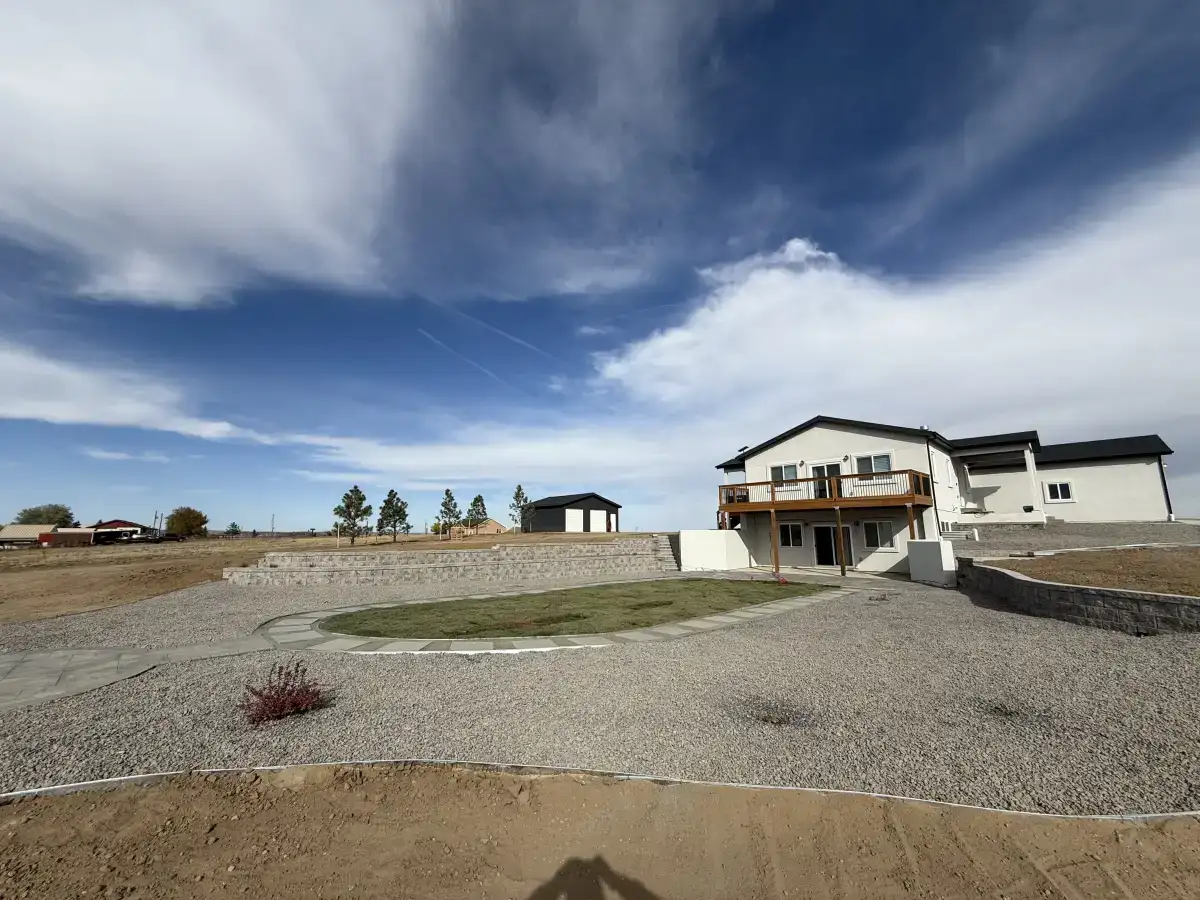
A patio is rarely a standalone project in Colorado Springs — it is the base for a complete outdoor living environment. With 247 sunny days per year and comfortable outdoor temperatures from April through October, Colorado Springs homeowners get more use from their patios than residents in most parts of the country. Our most popular patio projects include integrated features that transform a flat surface into a multi-functional outdoor room.
Fire pits and outdoor fireplaces extend patio season by three to four months, making cool spring and fall evenings comfortable for entertaining. Built-in seating walls constructed from matching paver or stone material create permanent gathering space around fire features without the clutter of freestanding furniture. Outdoor kitchen islands with built-in gas grills, prep counters, and storage transform dinner preparation from an indoor chore to an outdoor experience with Pikes Peak in the background.
For homeowners in Briargate, Northgate, and Wolf Ranch where lot lines are closer together, privacy integration is a key component of patio design. We combine low retaining walls with vertical plantings, decorative screens, and pergola structures to create defined outdoor rooms that feel private without violating setback requirements or blocking mountain views. The combination of hardscaping and strategic softscape creates patios that function as genuine extensions of the home's living space rather than just a flat surface in the backyard.
Patio scope is shaped by material selection, square footage, layout, excavation, base preparation, drainage, access, and integrated features.
Patio Installation Colorado Springs FAQ
Pavers, flagstone, and concrete each require a different base, edge detail, maintenance plan, and response to freeze-thaw conditions.
Interlocking concrete pavers and natural Colorado flagstone are the best patio materials for Colorado Springs. Pavers rated for 8,000+ PSI handle 200+ annual freeze-thaw cycles without cracking and allow individual unit replacement if needed. Flagstone — particularly Colorado sandstone — is naturally freeze-thaw resistant and blends with the local landscape aesthetic. We generally advise against poured stamped concrete for large patios at this elevation because it cannot flex with seasonal ground movement the way pavers and flagstone can, making it prone to cracking within 3-5 years.
At 6,035 feet elevation with expansive clay soil, Colorado Springs patio installations require a minimum 6-inch compacted Class 6 gravel base — significantly deeper than the 4-inch standard used at lower elevations. The frost line in El Paso County extends 24 to 30 inches, and clay soil expands up to 10% when wet. The deeper base provides a stable platform that distributes load evenly and prevents frost heave from lifting pavers. We excavate below the clay layer, compact in 2-inch lifts, and verify compaction density before laying any surface material.
The ideal patio installation window in Colorado Springs runs from April through October, with spring and fall being the most popular seasons. Paver and flagstone patios can technically be installed year-round since they do not require curing temperatures — unlike poured concrete which needs consistent temperatures above 50 degrees. We recommend booking spring projects by January or February to avoid the scheduling rush. Summer installations work well too, though we plan around the May-August hail season and afternoon thunderstorms that can temporarily halt work.