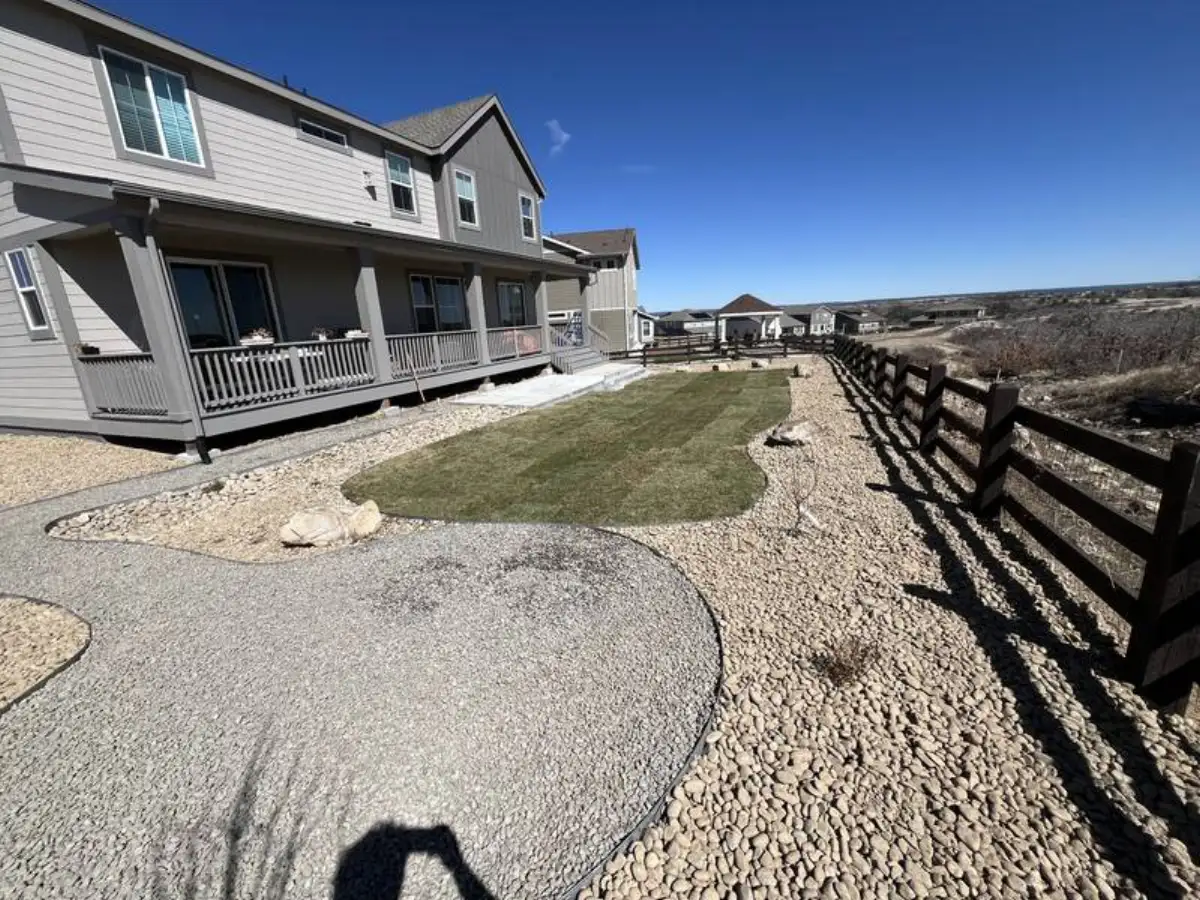
Xeriscaping project with native rock and drought-tolerant plants in Colorado Springs

Xeriscaping in Colorado Springs

Drought-tolerant landscape design built for 6,035 feet of elevation, 16 inches of annual rainfall, and 247 sunny days. Save 50-75% on outdoor water usage while creating a landscape that looks stunning year-round.

Why Colorado Springs Is Built for Xeriscaping

Colorado Springs receives just 16 inches of precipitation per year — roughly one-third of the national average. At 6,035 feet elevation along the Front Range, our city experiences intense UV radiation, rapid evapotranspiration, and alkaline clay soils with a pH between 7.5 and 8.5 that hold moisture unevenly. Traditional bluegrass lawns fight against every one of these conditions, demanding 18 to 22 gallons of water per square foot each growing season just to stay green. Xeriscaping works with Colorado Springs' natural climate instead of against it.

CN Landscaping LLC designs and installs xeriscape landscapes across every Colorado Springs neighborhood, from the established homes near Garden of the Gods and Old North End to newer master-planned communities in Briargate, Northgate, and Cordera. Our xeriscape designs are not barren gravel beds — they are layered, colorful landscapes featuring native perennials, ornamental grasses, strategically placed boulders, and efficient drip irrigation systems that deliver water directly to root zones where plants need it most.

With 247 sunny days per year and Colorado Springs Utilities enforcing outdoor watering restrictions, xeriscaping is not just an environmental choice — it is the practical, financially smart approach to landscaping at elevation. Our clients typically see their outdoor water consumption drop by 50 to 75 percent within the first full growing season after a xeriscape conversion.

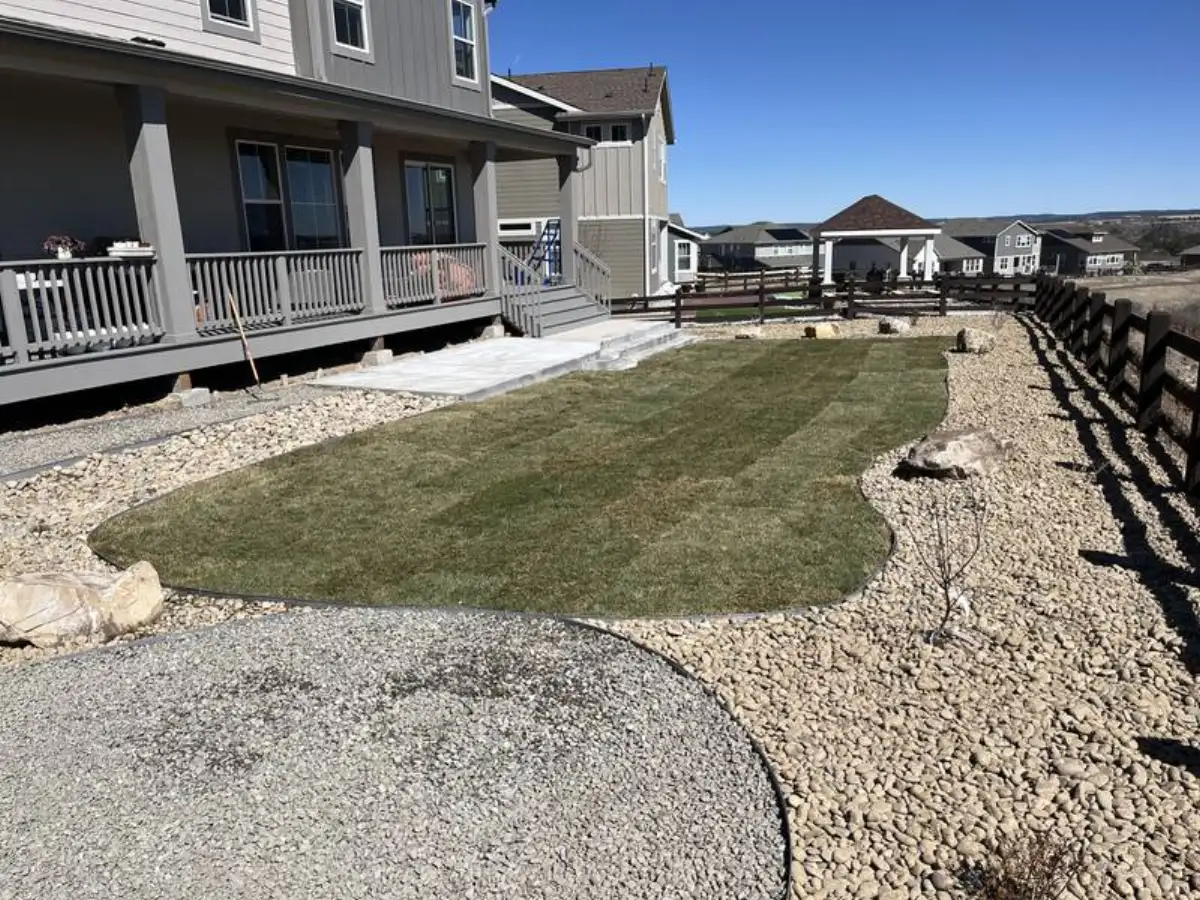
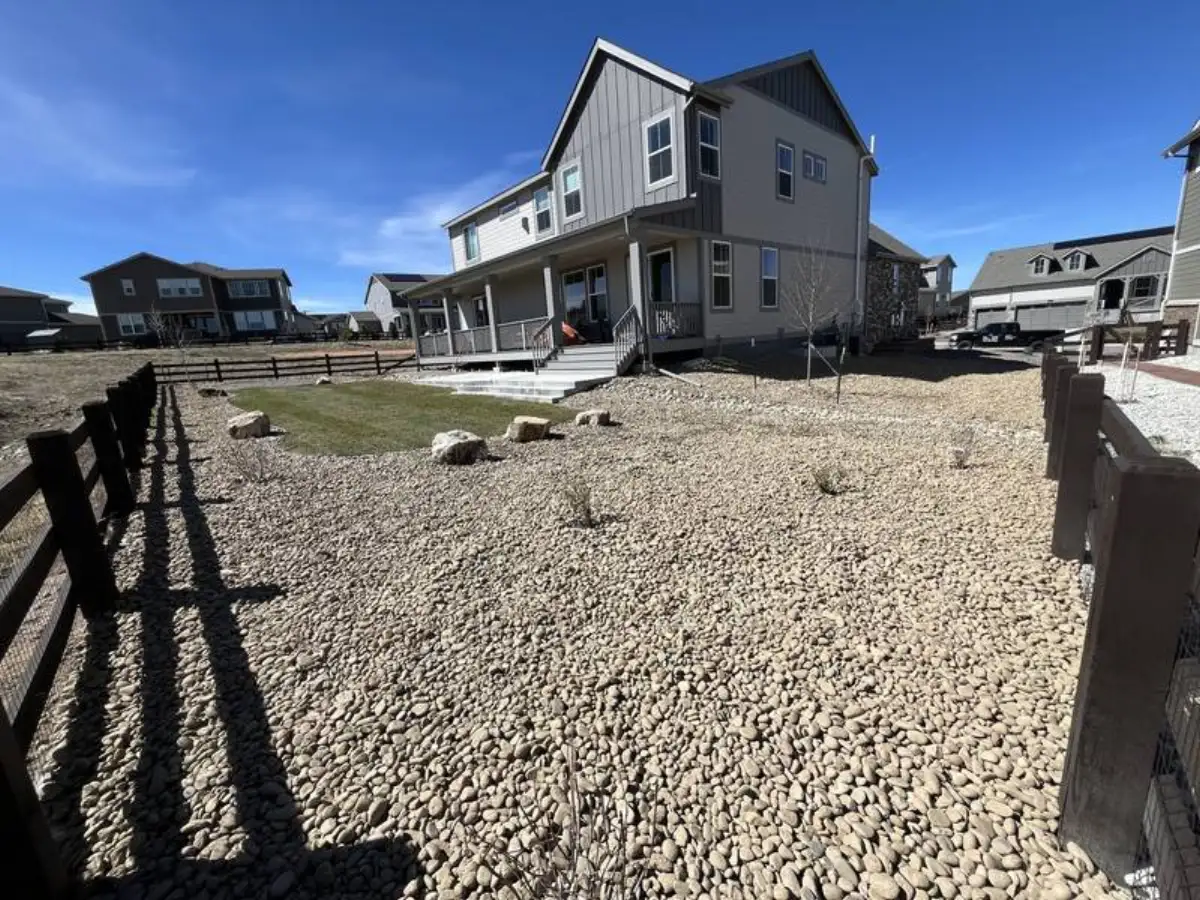
Completed xeriscape landscape with rock mulch and native plants in Colorado Springs

Xeriscape Design Across Colorado Springs Neighborhoods

Every part of Colorado Springs presents different soil composition, sun exposure, wind patterns, and HOA requirements. We design xeriscape solutions tailored to each neighborhood's specific conditions.

Briargate, Northgate, and Cordera

The northern corridor of Colorado Springs sits at approximately 6,400 feet with strong afternoon winds sweeping off the Palmer Divide. Properties in Briargate, Northgate, and Cordera were largely built with builder-grade bluegrass that struggles through summer watering restrictions. Our xeriscape conversions for these neighborhoods focus on wind-tolerant native grasses like Blue Grama and Buffalo Grass in swales, with Russian Sage, Penstemon, and Catmint providing seasonal color along walkways and patios. HOA boards in Cordera, Wolf Ranch, and Flying Horse Ranch have increasingly supported xeriscape conversions, and we prepare the architectural review board submittal package as part of every design.

Broadmoor and Cheyenne Mountain

The southwest side of Colorado Springs features the most dramatic topography in the city, with properties climbing toward Cheyenne Mountain and North Cheyenne Canyon Park. These neighborhoods sit in a microclimate that is slightly cooler and more sheltered than the rest of the city, allowing a wider palette of drought-tolerant plants. We incorporate Serviceberry, Three-Leaf Sumac, and Mountain Mahogany into designs that complement the natural Pikes Peak granite outcroppings found on many properties. The proximity to wildland areas also makes fire-wise xeriscape design essential — replacing combustible mulch with decorative rock and maintaining defensible space through low-growing native groundcovers.

Flying Horse and Wolf Ranch

The luxury communities anchored by the Flying Horse Club demand refined xeriscape design that maintains high curb appeal while reducing water dependency. Properties here feature expansive lots with views of the Rampart Range and Air Force Academy, and homeowners expect landscape designs that match the quality of the surrounding community. Our xeriscape plans for Flying Horse incorporate ornamental boulder groupings sourced from local quarries, specimen plantings of Bristlecone Pine and Blue Spruce as focal points, and sweeping beds of Karl Foerster feather reed grass and Blue Avena that sway gracefully in the afternoon breeze. Drip irrigation zones are programmed independently for each microclimate on the property, ensuring established xeric plantings receive minimal supplemental water while newer installations get the moisture they need to root deeply.

Old North End and Midtown

The historic Old North End neighborhood requires xeriscape designs that respect the character of properties dating to the late 1800s. Rather than removing all turf, we often design hybrid landscapes that retain a small area of drought-tolerant turf such as Tall Fescue or Buffalo Grass near gathering areas, surrounded by xeric perennial beds and flagstone borders. Monument Valley Park runs through this corridor, and many properties border the park trail system — our designs create natural transitions between private xeriscape gardens and the established public green space. Mature trees like Bur Oak and Austrian Pine already shade portions of these yards, requiring shade-tolerant xeric species like Kinnikinnick and Oregon Grape beneath the canopy.

How We Design Xeriscape Landscapes in Colorado Springs

Successful xeriscaping at 6,035 feet starts with understanding the specific conditions on your property — not applying a generic template. Here is how CN Landscaping approaches every xeriscape project in Colorado Springs.

  • Soil testing and site analysis — We test your soil pH, drainage rate, and clay content. Most Colorado Springs properties have alkaline clay between pH 7.5 and 8.5, which determines our amendment strategy and plant selection
  • Hydrozoning — We map your property into water-use zones based on sun exposure, slope, wind exposure, and proximity to structures. High-visibility areas near entryways may receive moderate-water plantings while slopes and side yards get true xeric species
  • Native and adapted plant selection — Every plant we specify is rated for USDA Zone 5b and performs in alkaline soil at elevation. We select species from the Colorado Springs Utilities recommended plant list and our own years of experience with what actually thrives here
  • Rock mulch and hardscape integration — Colorado Red rock, river rock, and locally quarried boulders replace organic mulch that decomposes and blows in our wind. Decorative rock retains heat, suppresses weeds, and reduces maintenance permanently
  • Drip irrigation design — Targeted drip irrigation delivers water directly to root zones rather than spraying it into the air where evapotranspiration at altitude wastes 30-40 percent before it reaches the soil
  • Weed barrier and soil preparation — Professional-grade landscape fabric and 3-4 inches of amended soil beneath planting areas prevent weed germination while allowing water penetration to root systems
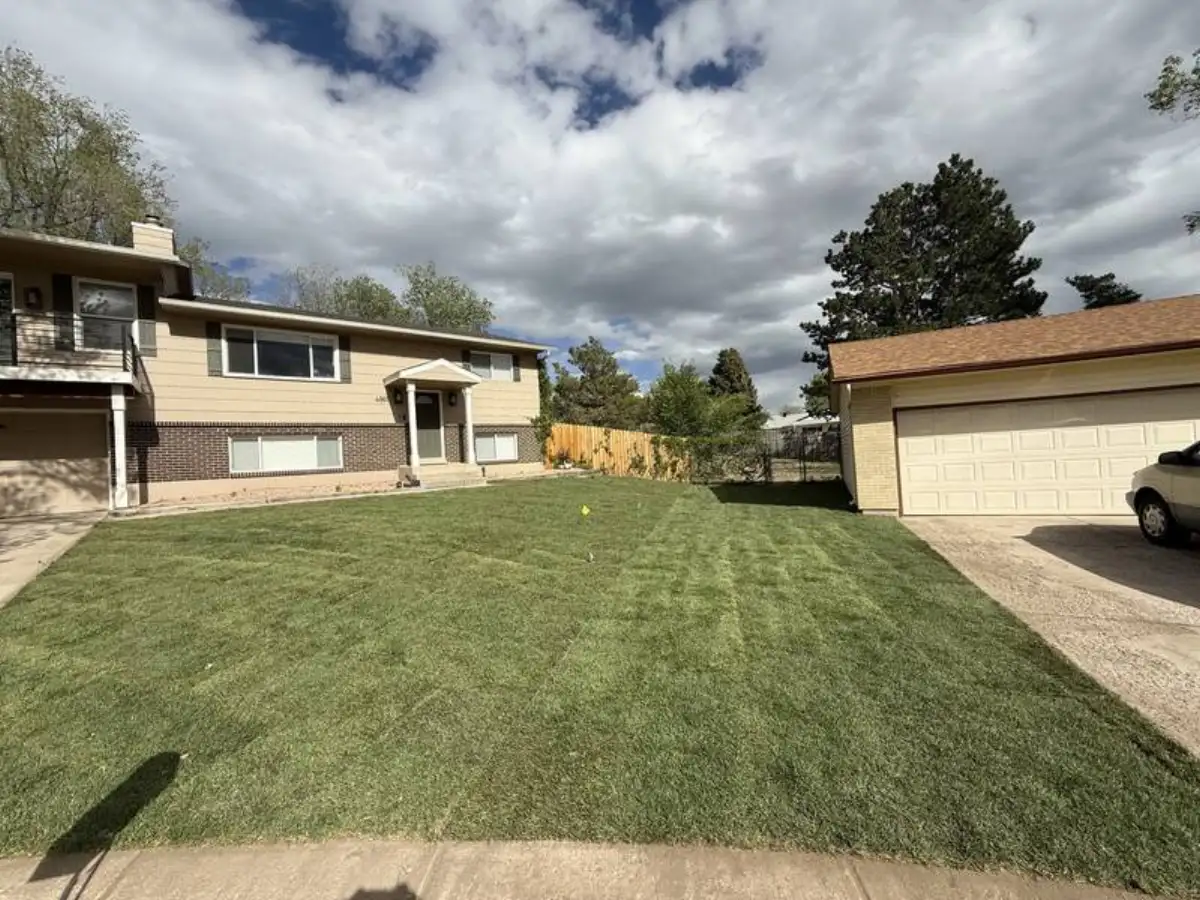
Xeriscape design installation in progress in Colorado Springs neighborhood

Best Xeriscape Plants for Colorado Springs

These species are proven performers at 6,035 feet in USDA Zone 5b with alkaline clay soil, intense UV, and 200+ freeze-thaw cycles per year.

Ornamental Grasses

Karl Foerster feather reed grass provides year-round vertical structure and tolerates our clay beautifully. Blue Avena grass delivers silver-blue color on dry slopes. Blue Grama, Colorado's state grass, forms a low-maintenance turf alternative that survives on natural rainfall alone once established. These grasses handle the strong afternoon winds that sweep through Briargate and Northgate without snapping or lodging.

Flowering Perennials

Russian Sage blooms from July through October with lavender-blue flowers that attract pollinators at a time when few other plants are flowering. Penstemon varieties including Rocky Mountain and Palmer provide vivid red, pink, and purple blooms from May through July. Blanket Flower, Catmint, and Lavender (Phenomenal variety handles our winters) round out a xeriscape that has continuous color from spring through fall without supplemental watering after establishment.

Native Shrubs and Trees

Gambel Oak, Mountain Mahogany, and Apache Plume provide structure and screening in xeriscape designs without demanding irrigation. Rabbitbrush offers brilliant yellow fall color that lights up against rock mulch. For specimen trees, Bristlecone Pine — native to the Pikes Peak massif — and Bur Oak tolerate our alkaline soil and drought conditions while providing the vertical scale that transforms a xeriscape from flat to three-dimensional.

Xeriscaping and Colorado Springs Water Restrictions

Colorado Springs Utilities manages one of the most carefully regulated water systems along the Front Range. Outdoor watering restrictions limit irrigation to specific days and times based on your address, and rate tiers increase the cost per gallon as consumption rises. For homeowners in neighborhoods like Briargate, Northgate, and Wolf Ranch where lot sizes range from 5,000 to 10,000 square feet, outdoor irrigation can account for 50 to 60 percent of summer water bills.

A well-designed xeriscape eliminates the constant battle with watering schedules. Once established — typically 1 to 2 growing seasons with proper care — xeric plantings survive on natural precipitation supplemented by targeted drip irrigation during the driest weeks of July and August. Our clients in the Broadmoor area and Cheyenne Mountain neighborhoods have documented water savings of $400 to $700 per year after converting from traditional bluegrass to xeriscape, with the landscape looking better than the lawn ever did.

Beyond individual property savings, xeriscaping contributes to the long-term water security of the entire Pikes Peak region. Colorado Springs draws water from multiple sources including reservoirs on the western slope, and as our city continues growing toward 600,000 residents, water-wise landscaping is becoming the standard expectation rather than an alternative approach. Many newer developments in Northgate, Banning Lewis Ranch, and the eastern expansion areas are already being built with xeriscape-ready lots that minimize traditional turf from the start.

Xeriscape Conversion in Colorado Springs

Converting an existing bluegrass lawn to xeriscape is the most popular project we handle in Colorado Springs. The process typically takes 3 to 5 days for a standard front yard and involves removing existing turf, amending the underlying clay soil, installing drip irrigation, placing weed barrier, planting xeric species, and covering exposed soil with decorative rock mulch.

We frequently combine xeriscape conversions with complementary services that transform the entire front or backyard. A flagstone or paver patio creates a defined gathering area within the xeriscape design. Retaining walls built from natural stone add elevation changes and planting terraces. Low-voltage LED landscape lighting highlights specimen plants and boulder features for dramatic evening curb appeal. The result is a complete outdoor environment that requires a fraction of the water and maintenance of a traditional landscape.

Properties near Garden of the Gods, the Air Force Academy, and along the Shooks Run corridor benefit especially from xeriscape conversions that echo the natural red rock and native plant palette of the surrounding public lands. Visitors and neighbors see a landscape that looks intentional and connected to the Colorado Springs environment rather than a transplanted midwestern lawn fighting to survive at altitude.

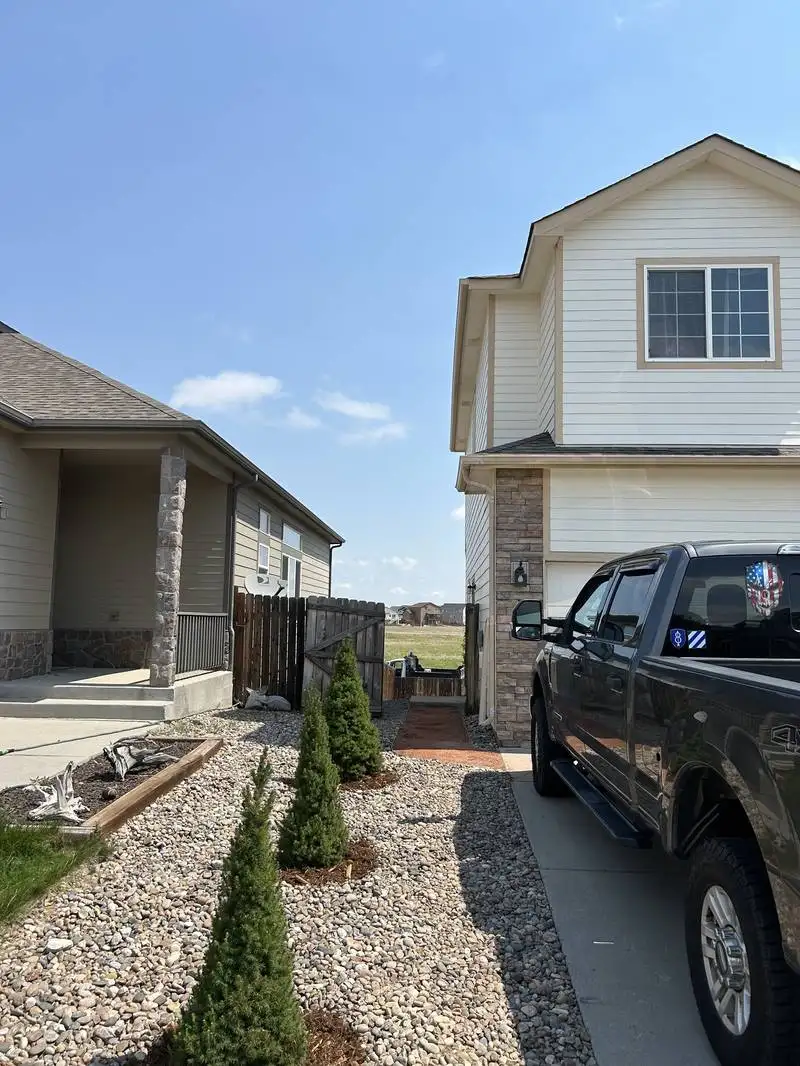
Completed xeriscape conversion with gravel and native plantings in Colorado Springs

Xeriscaping Colorado Springs FAQ

Xeriscaping in Colorado Springs typically costs $8 to $20 per square foot depending on design complexity, plant selection, and whether hardscape elements like flagstone paths or boulder features are included. A full front-yard xeriscape conversion for a typical Colorado Springs home (800-1,200 sq ft) ranges from $6,500 to $18,000. This includes soil amendment, weed barrier, drip irrigation, plants, and rock mulch. The investment typically pays for itself within 3-5 years through water savings alone.

The best xeriscape plants for Colorado Springs thrive in USDA Zone 5b with alkaline clay soil and 16 inches of annual rainfall. Top performers include Russian Sage, Penstemon (Rocky Mountain and Palmer varieties), Karl Foerster feather reed grass, Blue Avena grass, Rabbitbrush, Apache Plume, Lavender (Phenomenal and Hidcote varieties), Catmint, Butterfly Bush, and native wildflowers like Blanket Flower and Black-Eyed Susan. For shrubs, Gambel Oak, Mountain Mahogany, and Three-Leaf Sumac are excellent choices. Read our complete xeriscaping ideas guide for more plant recommendations.

Colorado Springs does not mandate xeriscaping, but Colorado Springs Utilities enforces outdoor watering restrictions that limit lawn irrigation to specific days and times based on your address. The city encourages water-wise landscaping through rebate programs and educational resources. Many HOAs in communities like Briargate, Cordera, and Wolf Ranch now actively support xeriscape conversions as water conservation becomes a higher priority across El Paso County.

Xeriscaping in Colorado Springs typically saves 50-75% on outdoor water usage compared to traditional bluegrass lawns. A standard Colorado Springs lawn requires 18-22 gallons per square foot per growing season, while a well-designed xeriscape needs just 4-8 gallons per square foot. For a 1,000 square foot area, that translates to roughly 14,000-18,000 gallons saved per season — enough to reduce your water bill by $300-600 annually depending on your rate tier with Colorado Springs Utilities.

Ready for a Water-Wise Landscape in Colorado Springs?

Get a free xeriscape design consultation. CN Landscaping designs and installs drought-tolerant landscapes across every Colorado Springs neighborhood.

Get a Free Estimate