
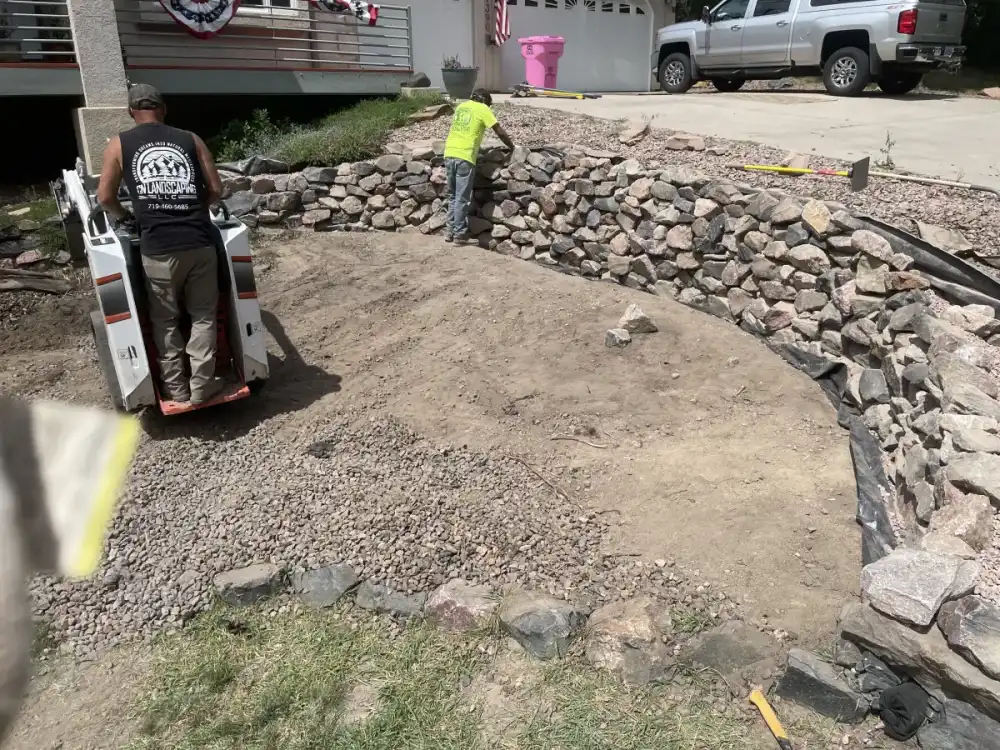
Why Drainage Problems Are So Common in Colorado Springs
Drainage problems in Colorado Springs are among the most common issues homeowners face, and the reasons are built into the land itself. Heavy clay soils along the Front Range absorb almost no water. Sloped terrain funnels runoff toward foundations. And intense summer thunderstorms regularly dump 1 to 2 inches of rain in under an hour, overwhelming yards that have no drainage system in place.
The result is standing water, soggy lawns that take days to dry, erosion cutting through landscaping, and basement moisture that leads to mold and foundation damage. These problems do not fix themselves, and they get worse every year as soil compacts further and drainage paths shift.
CN Landscaping diagnoses and fixes residential drainage issues throughout Colorado Springs, Monument, Fountain, Falcon, Black Forest, Larkspur, and Perry Park. French drains typically cost $2,000 to $6,000, channel drains run $1,500 to $4,000, and dry creek beds range from $1,000 to $5,000 depending on length and complexity. Every project starts with a site evaluation to identify exactly where water is going and the most effective way to redirect it.
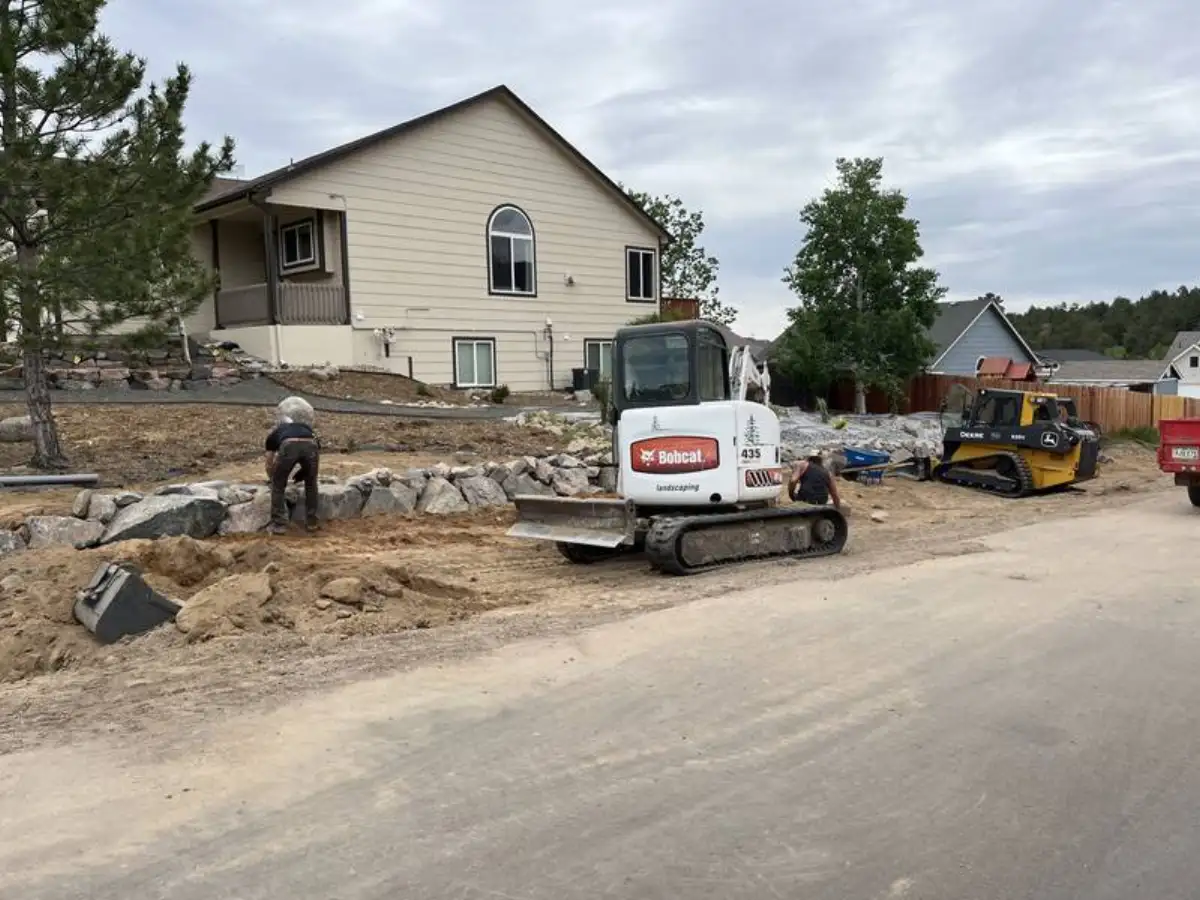
Types of Drainage Solutions We Install
Each drainage system serves a different purpose. Here is how they compare for Colorado Springs soil and terrain conditions.
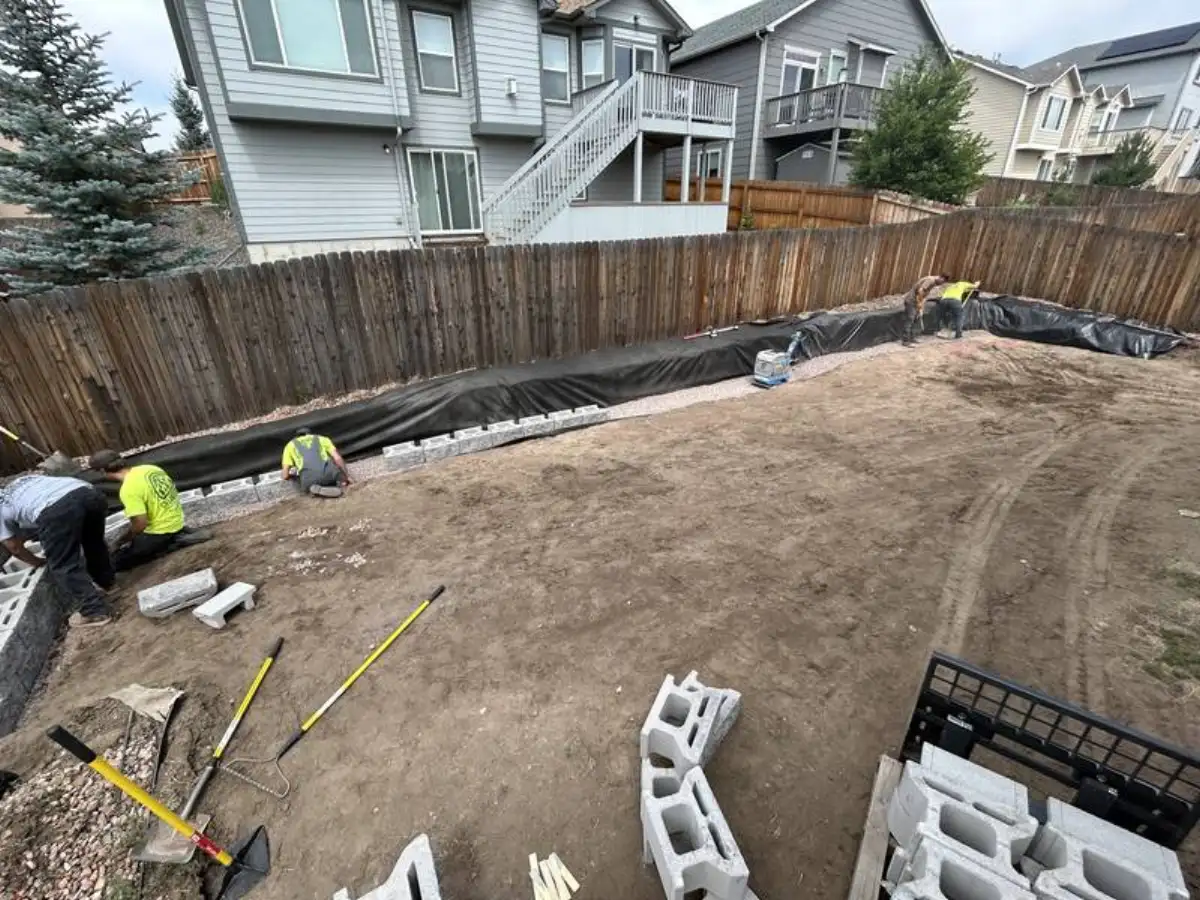
French Drains
French drains are the most effective subsurface drainage solution for Colorado Springs properties. A trench is excavated 18 to 24 inches deep, lined with filter fabric, filled with clean drainage gravel, and fitted with a 4-inch perforated pipe that collects groundwater and redirects it to a safe discharge point. French drains intercept water before it reaches foundations, making them the go-to solution for basement moisture, retaining wall drainage, and hillside water management. Cost: $2,000 to $6,000 depending on length and depth.
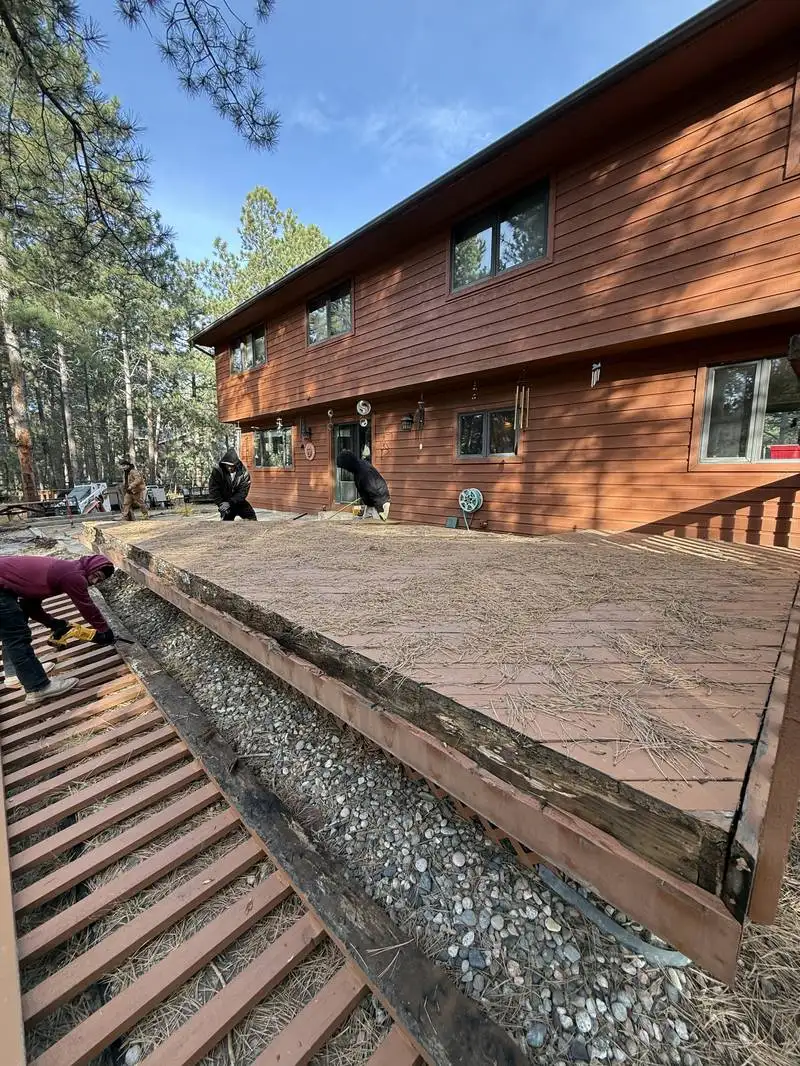
Channel and Trench Drains
Channel drains (also called trench drains) collect surface water along driveways, patios, walkways, and other hardscape edges where runoff concentrates. A narrow channel with a grate sits flush with the surface, capturing sheet flow and directing it through underground pipe to a discharge point. Channel drains are essential wherever impervious surfaces create fast-moving runoff that would otherwise flood adjacent landscaping or pool against foundations. Cost: $1,500 to $4,000.
Dry Creek Beds
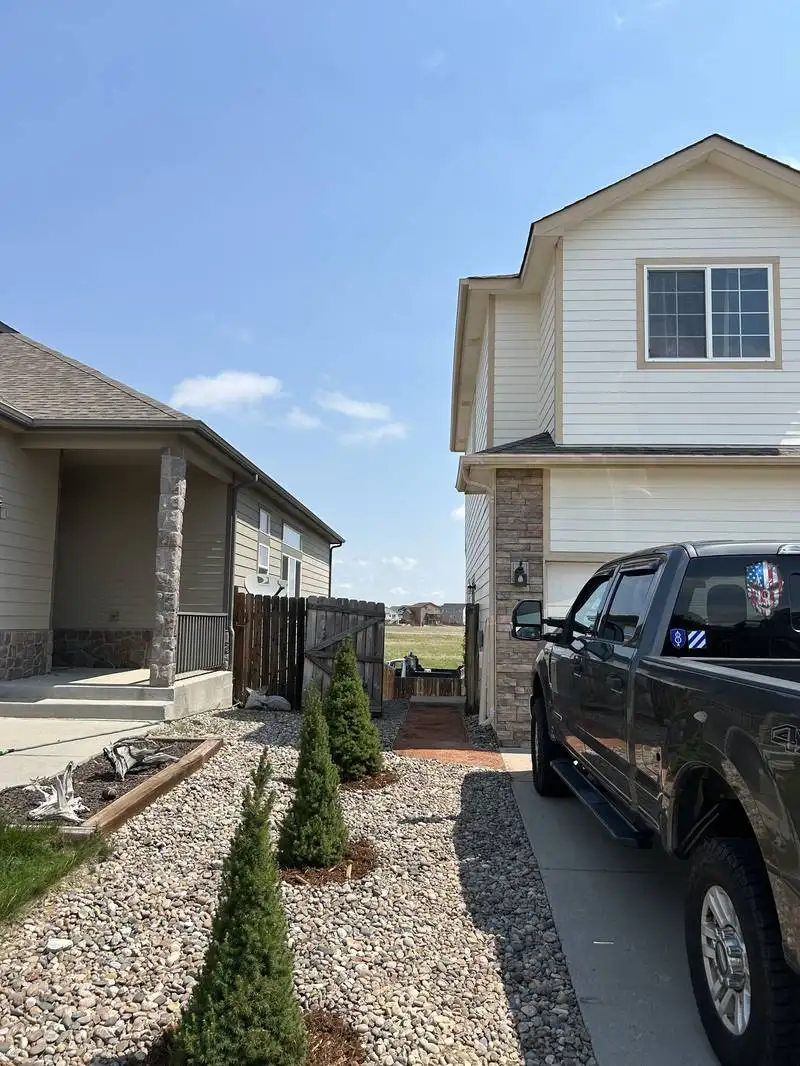
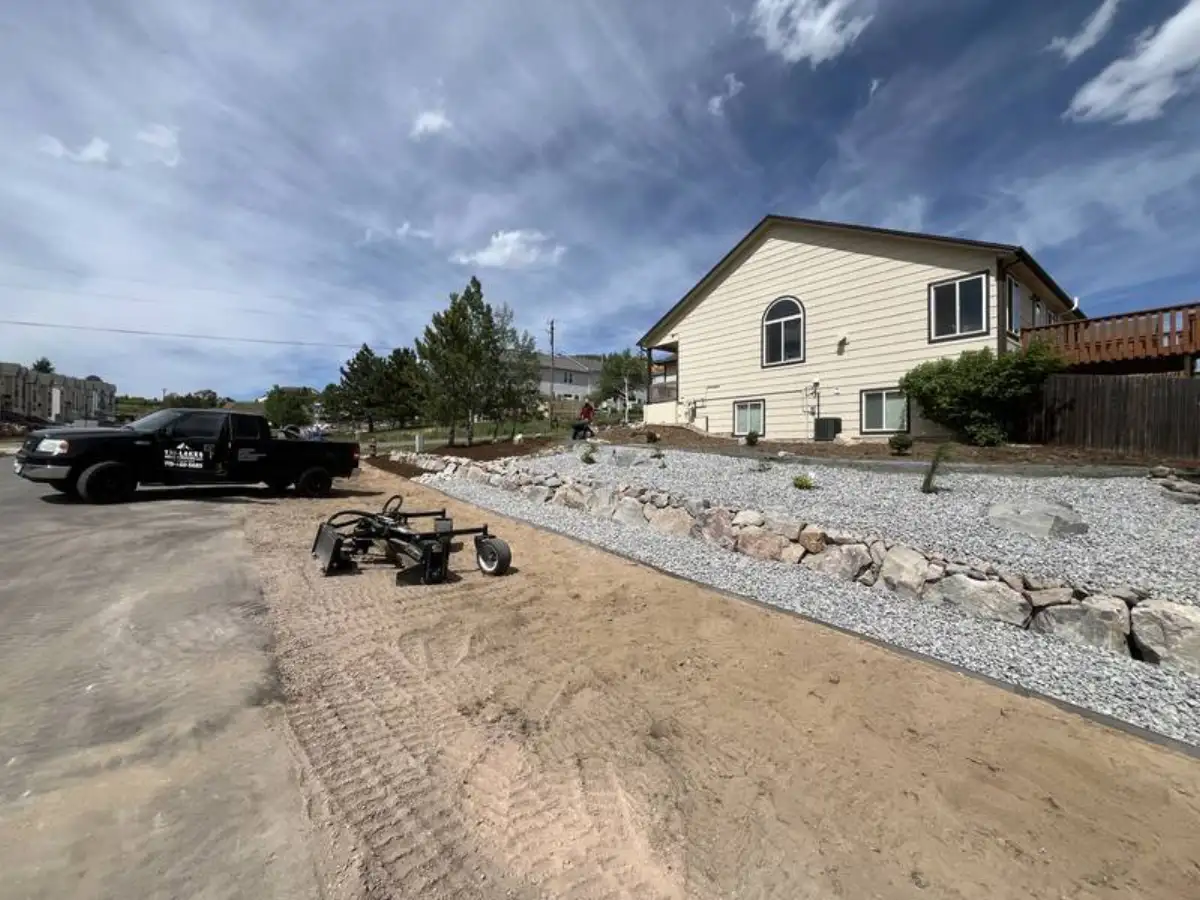
Dry creek beds combine drainage function with landscape aesthetics. Natural stone and river rock line a shallow channel that directs surface water across the property during storms while looking like a decorative landscape feature when dry. Dry creek beds work well for properties where underground drainage is not practical, or as a complement to French drains that handle overflow during heavy rain events. They integrate naturally with rock landscaping and xeriscape designs. Cost: $1,000 to $5,000.
Grading, Downspouts, and Rain Gardens
Not every drainage problem requires underground pipe. Sometimes the most effective fix is reshaping the land itself or managing where your roof runoff goes.
Grading and regrading: Correcting the slope of your yard so water flows away from the foundation instead of toward it. Proper grading calls for a minimum 2% slope (about 1 inch of drop per 4 feet) away from the house for the first 10 feet. Many Colorado Springs homes, especially those built on cut-and-fill lots, have settled over time and lost their original drainage grade. Regrading restores that slope and eliminates the root cause of many drainage failures.
Downspout extensions: Roof gutters collect thousands of gallons per storm, and short downspouts dump that concentrated flow right against the foundation. We extend downspouts underground through solid pipe, discharging water 10 to 20 feet from the house into a dry well, pop-up emitter, or day-lighted drain. This single fix often solves basement moisture problems without any other excavation.
Rain gardens: Shallow, planted depressions designed to capture and absorb runoff from roofs, driveways, and lawns. Rain gardens use native, drought-tolerant plants that thrive in the wet-dry cycle. They reduce runoff volume, filter sediment, and add curb appeal. Rain gardens pair well with landscape design projects and are especially effective in Falcon and Monument where lot sizes provide room for natural infiltration areas.
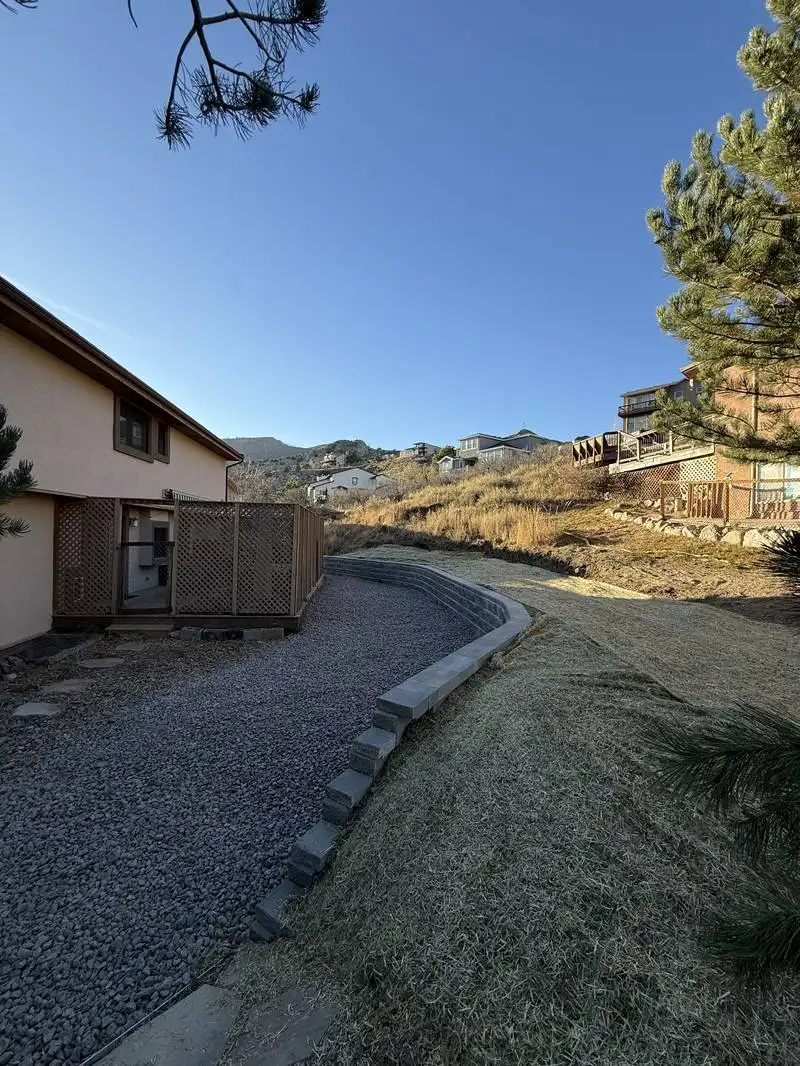
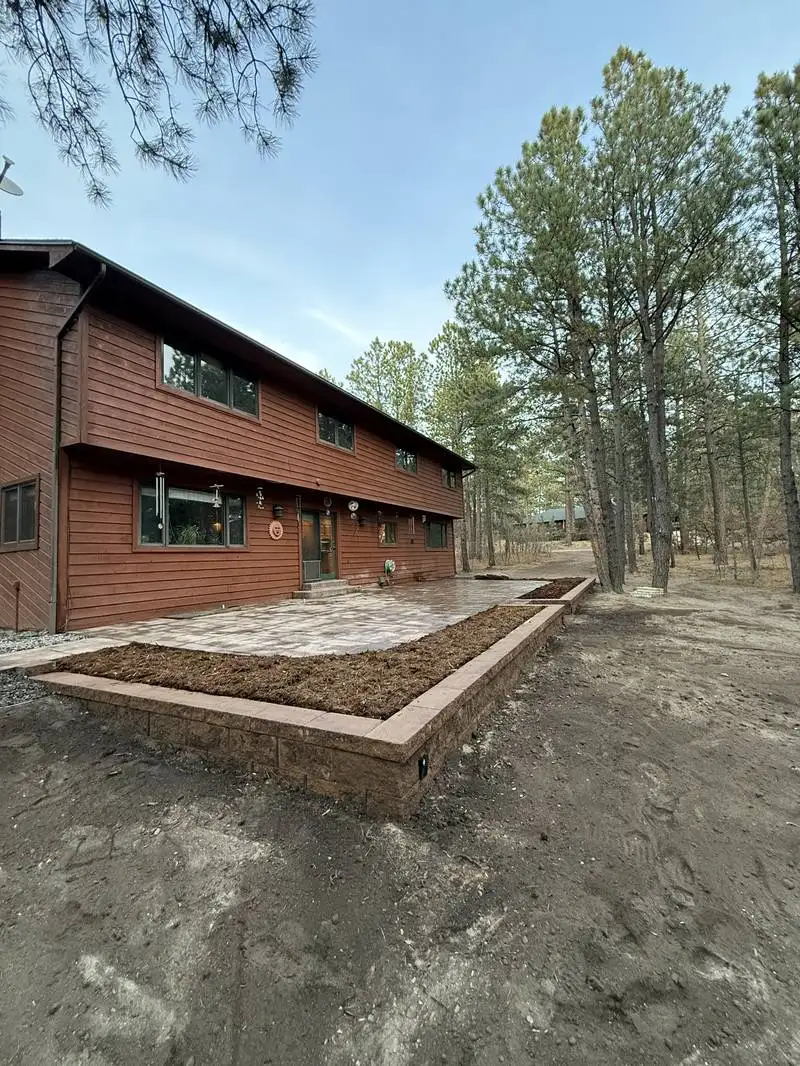
Retaining walls for slope management: On steep lots, retaining walls create terraces that slow runoff velocity and give water time to infiltrate. Walls with integrated drainage systems behind them are one of the most effective solutions for hillside erosion, especially in neighborhoods near Cheyenne Mountain, the Broadmoor area, and the north end of Colorado Springs.
Common Drainage Problems in Colorado Springs
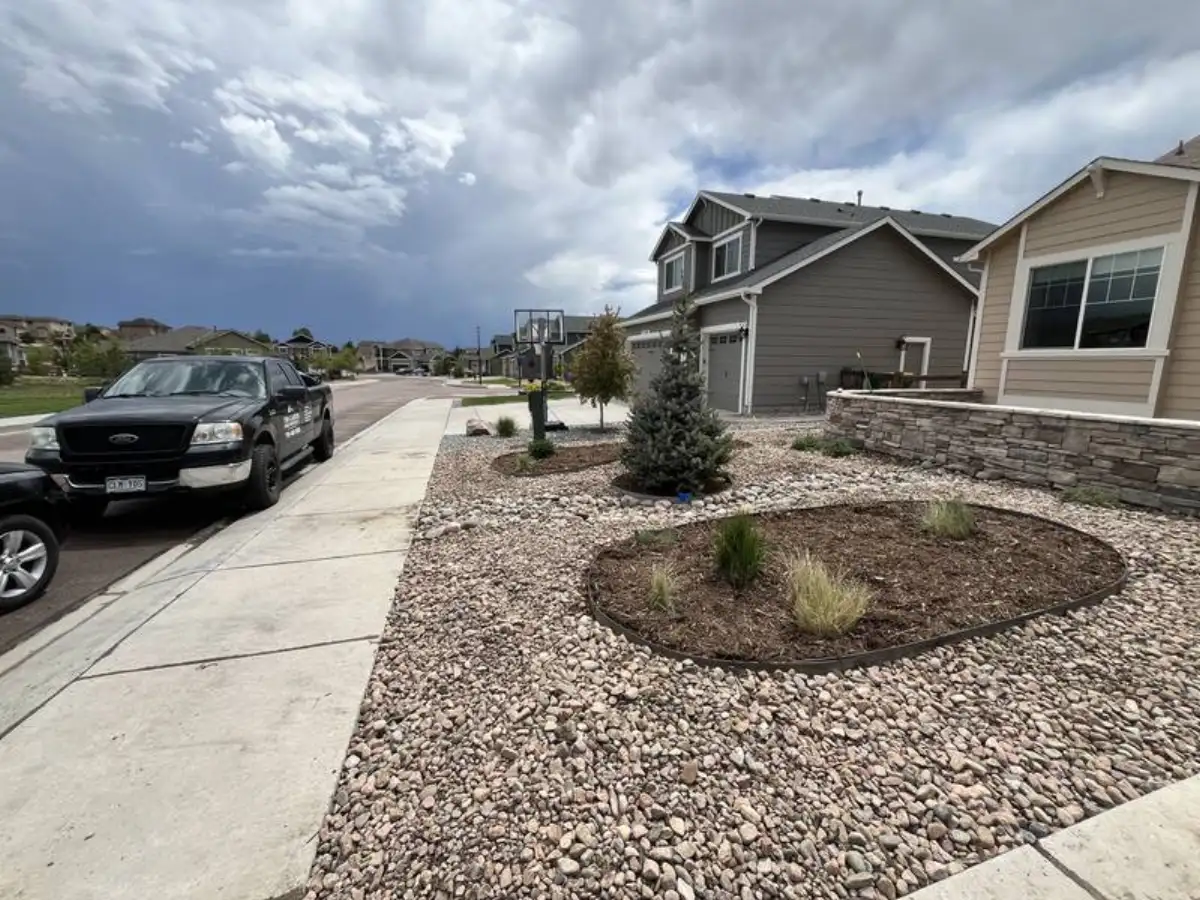
El Paso County's combination of clay soil, steep terrain, and intense weather creates drainage problems that are specific to this region. Here are the issues we see most often.
Standing water after storms: Colorado Springs thunderstorms drop heavy rain in short bursts. Clay soil cannot absorb it fast enough, so water pools in low spots, against foundations, and in flat backyard areas. Standing water that does not drain within 24 hours is a sign of inadequate drainage.
Basement flooding and moisture: Water migrating through soil and pooling against foundation walls is the primary cause of basement water intrusion in Colorado Springs. Hydrostatic pressure pushes water through cracks, joints, and porous concrete. French drains intercepting water before it reaches the foundation are the permanent fix.
Erosion on sloped lots: Properties near Cheyenne Mountain, the Broadmoor neighborhood, Briargate, and the north end of Colorado Springs sit on slopes that accelerate runoff. Without intervention, water cuts channels through landscaping, washes away topsoil, exposes roots, and undermines retaining walls, patios, and walkways.
Foundation damage from poor grading: When the ground slopes toward the house instead of away from it, every rainstorm delivers water directly to the foundation. Over time, the wet-dry cycle in expansive clay causes differential settlement, which cracks foundations. Regrading and drainage installation prevent this damage before it requires expensive structural repairs.
Soggy yards that will not dry: Some areas of Colorado Springs, particularly in Fountain, lower-elevation Falcon neighborhoods, and areas near Fountain Creek, have naturally high water tables or sit in drainage paths that keep yards saturated well after storms pass.
Why Colorado Springs Clay Soil Makes Drainage Worse
The soils across El Paso County are dominated by bentonite clay, and this single geological factor is responsible for most of the drainage problems homeowners face in Colorado Springs.
Clay expands when wet: Bentonite clay can swell up to 10% in volume when saturated. That expansion closes off any natural pore space that would otherwise allow water to percolate downward. The result is water sitting on top of the soil instead of draining through it. After a 1-inch rainstorm, a yard with clay soil may hold standing water for 24 to 48 hours while a sandy-soil property drains in minutes.
Hardpan layers block drainage: Compacted clay creates hardpan layers 6 to 18 inches below the surface that act as an impervious barrier. Even if the top few inches of soil absorb some moisture, the water hits the hardpan and stops, creating a perched water table that keeps the root zone saturated and prevents deep drainage.
Freeze-thaw cycles compound the problem: Colorado Springs averages over 150 freeze-thaw cycles per year. Saturated clay freezes and expands, then thaws and contracts. This repeated movement shifts soil, cracks foundations, displaces retaining walls, and changes drainage patterns over time. Properties that drained adequately when new can develop serious problems within 5 to 10 years as the ground shifts.
Rapid snowmelt in spring: When 6 to 12 inches of snow melts over 2 to 3 days during a warm March or April stretch, the resulting water volume overwhelms clay soil that is still partially frozen underneath. Spring is peak season for basement flooding and yard erosion calls in Colorado Springs for exactly this reason.
How We Diagnose and Fix Drainage Problems
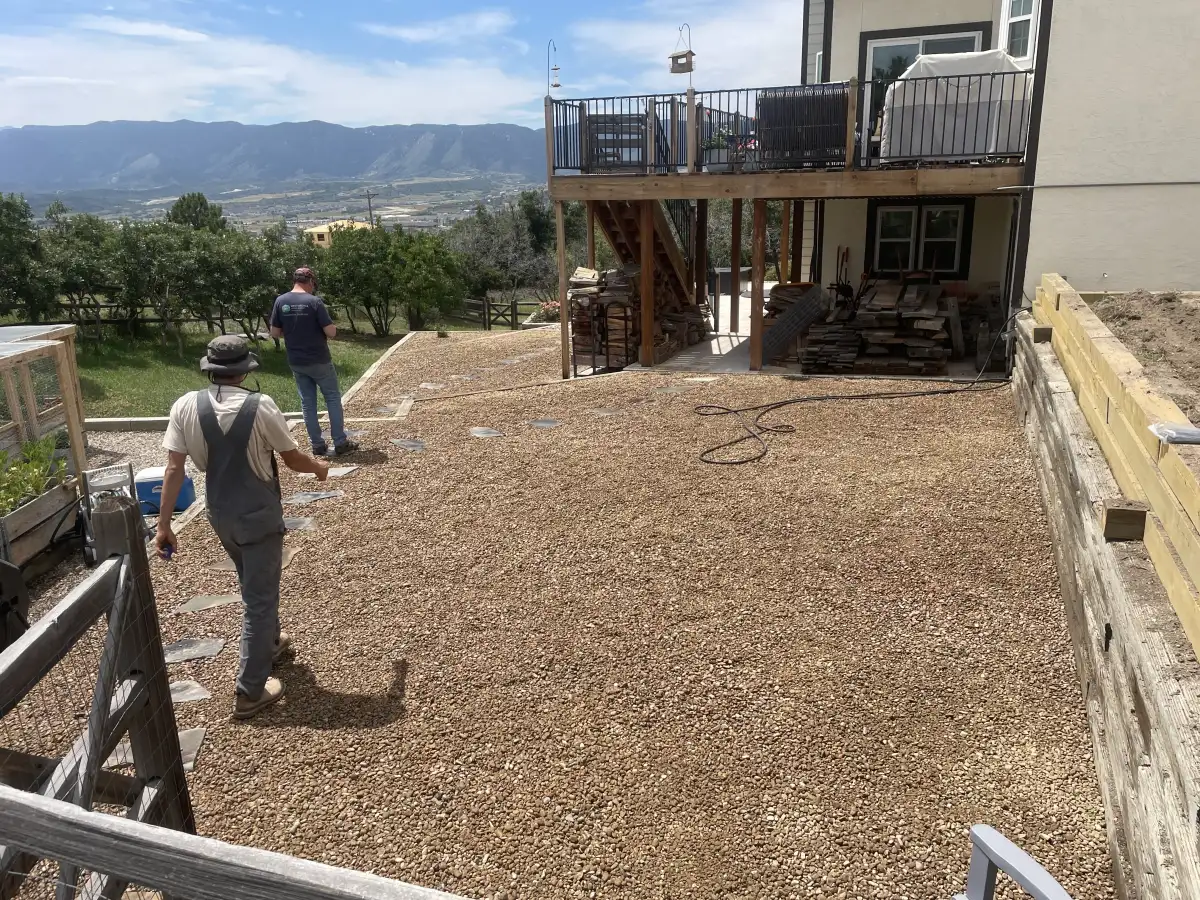
Effective drainage work starts with understanding exactly where water is coming from, where it is going, and why it is not getting there on its own. Here is the process we follow on every project.
1. Site evaluation: We walk the property during or after rain when possible, or use topographic assessment to identify low spots, drainage paths, soil conditions, and the relationship between the yard, foundation, and neighboring properties. We check downspout locations, slope angles, soil compaction, and any existing drainage infrastructure.
2. Drainage mapping: Using the site evaluation data, we map where water enters the property, how it flows across the surface and subsurface, and where it needs to exit. This map becomes the design basis for the entire drainage plan.
3. Solution design: Based on the drainage map, we recommend the right combination of systems. Most properties need more than one approach — for example, a French drain along the foundation combined with regrading in the backyard and downspout extensions to a dry well.
4. Excavation: Trenches are dug to the required depth and grade using mini excavators on larger projects or hand-digging in tight areas near foundations, fences, and existing landscaping.
5. Installation: Pipe, gravel, filter fabric, channel drains, and other components are installed to specification. All drain lines are set on proper grade (minimum 1% slope) to ensure water moves by gravity.
6. Backfill and restoration: Trenches are backfilled with clean aggregate and topped with soil. Disturbed areas are restored with sod, seed, or rock to match the surrounding landscape.
7. Post-install testing: We test the system with water to verify flow rates, confirm discharge is reaching the intended exit point, and verify no pooling occurs along the drain route.
Drainage Solution Costs in Colorado Springs
Transparent pricing based on drainage type, project scope, and site conditions. Every estimate is detailed and itemized.
Typical Cost Ranges by Solution
French drains: $2,000 to $6,000 depending on total length, depth, and site access. A standard 50-foot exterior French drain runs approximately $2,500 to $4,000.
Channel/trench drains: $1,500 to $4,000. Driveway channel drains average $1,500 to $2,500. Patio and walkway drains cost $1,000 to $2,000 per drain run.
Dry creek beds: $1,000 to $5,000 depending on length, stone selection, and whether decorative plantings are included. A 30-foot dry creek bed with natural Colorado stone typically costs $2,000 to $3,500.
Regrading: $1,000 to $3,000 for foundation-area regrading. Full-yard regrading on larger lots can reach $3,000 to $6,000.
Downspout extensions: $300 to $800 per downspout for underground extensions with pop-up emitters.
Factors That Affect Cost
Soil conditions: Hard-packed clay or rocky substrate increases excavation time and cost by 10% to 25%.
Access difficulty: Narrow side yards, steep slopes, and fenced areas that limit equipment access increase labor costs.
Landscape restoration: Replacing sod, irrigation lines, or plantings disturbed during excavation adds to the total project cost.
Drainage Solutions FAQs
You likely need a French drain if water pools in your yard after rain, your basement or crawl space stays damp, you notice erosion along your foundation, or water flows toward your house instead of away from it. French drains are the most effective subsurface drainage solution for Colorado Springs properties because they intercept groundwater before it reaches foundations. A site evaluation will confirm whether a French drain, surface drain, or combination approach is the right fix for your specific drainage problem.
Yes. Standing water is the most common drainage complaint we address in Colorado Springs. The fix depends on the cause — poor grading, compacted clay soil, a high water table, or inadequate downspout discharge. Solutions range from regrading the yard to direct water flow away from low spots, installing French drains to collect subsurface water, adding channel drains in hardscape areas, or building dry creek beds that move water decoratively across the property. Most standing water problems are solved with a combination of grading corrections and one or two drain installations.
Most residential drainage projects in Colorado Springs do not require permits. Standard French drains, channel drains, dry creek beds, and grading work on your own property typically fall below permit thresholds. However, if the project involves redirecting water onto neighboring properties, connecting to the city storm sewer system, or significant grading that changes the lot's drainage pattern, you may need approval from El Paso County or the city. CN Landscaping evaluates permit requirements for every project and handles any necessary paperwork.
A single French drain or channel drain installation typically takes 1 to 2 days. A full-yard drainage system with multiple drain runs, regrading, and a dry creek bed takes 3 to 5 days depending on yard size and soil conditions. Colorado Springs clay soil can slow excavation, especially during dry periods when the ground is hard-packed. We schedule drainage work to minimize disruption and restore landscaping after installation.
Absolutely. Most of our drainage projects are retrofits on established properties where drainage problems developed over time or were never properly addressed during construction. We carefully route drain lines to minimize disruption to existing plants, trees, hardscaping, and irrigation systems. Trenching equipment allows precise excavation without tearing up the entire yard. After installation, we backfill, compact, and restore the affected areas with topsoil, seed, or sod to match the surrounding landscape.
Need Drainage Solutions in Colorado Springs?
Get a free, no-obligation estimate for your drainage project. Serving Colorado Springs, Monument, Fountain, Falcon, Black Forest, Larkspur, and Perry Park.